Along the trail featuring plants and structures such as those used by Native Americans, we find a shelter built completely using items found in the Arizona desert. During the Christmas holidays, the Garden sponsors a special "Las Noches De Las Luminarias" nighttime event (if you've never been, don't miss it), these shelters are used by indigenous people to share stories from their culture that are new to me and most non-Natives. It is a delightful experience.

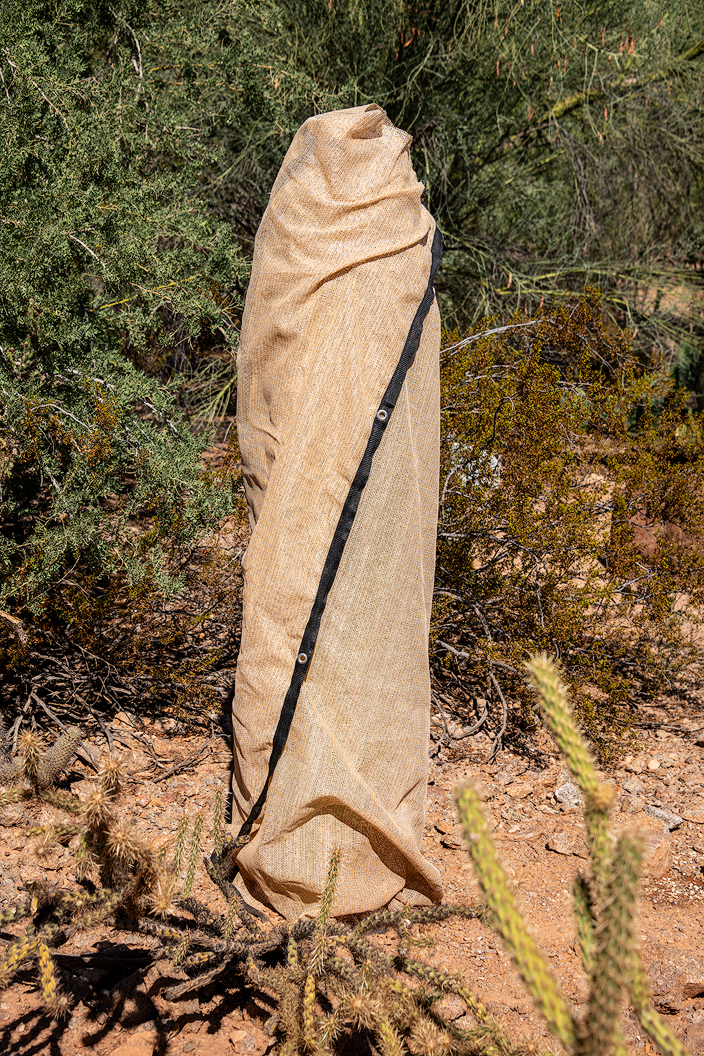
I noticed a number of these cloth-covered figures in various spots around the gardens. I eventually discovered that underneath the cloth, one would find a smaller cactus. I quickly assumed that the cloth was to protect a young cactus from the murderous Arizona sun during the summer months.
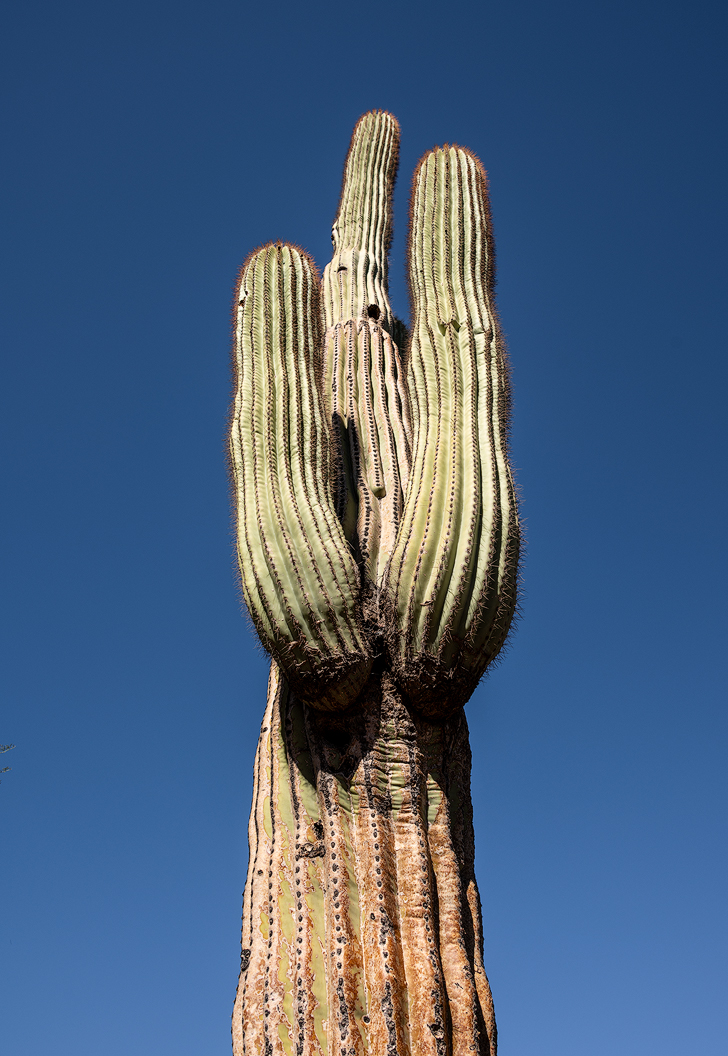
This monstrous cactus did not need a cloth for protection. Notice the holes in the center arm of the cactus. Most holes are caused by Gila woodpeckers and gilded flickers. They make their nests in the trunks of saguaros by hollowing out a space in which they will raise their young. In response to the birds’ activity, the wound created will dry out and harden off, forming a callus. Because the shape of the nest often resembles a shoe, these cavities are known as saguaro “boots.” The birds keep the nests cleaned out and, when abandoned, other birds, such as elf owls and house finches, often move in, with the saguaro serving as a hotel of sorts. There is no practical method for deterring the woodpeckers. While the nesting holes pose no serious threat to the plant.
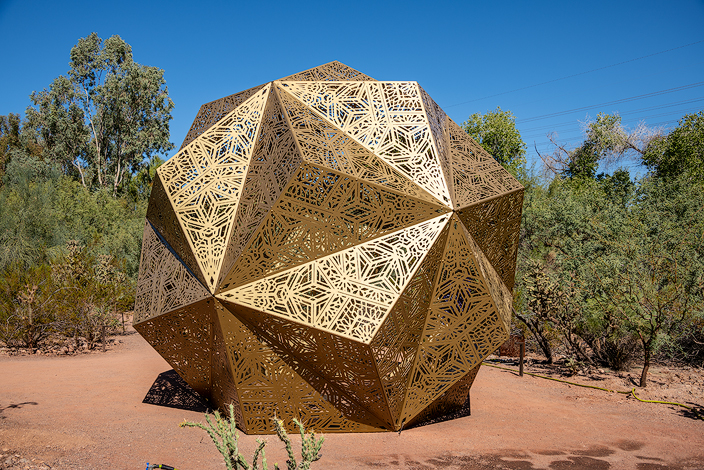
Oh, another of the geometric shapes again triggering my desire for the sun to go down so they can light up the giant "ornament". By the way, this special show is now closed — of course, the garden remains open and, for a short time, you may see workers removing the artwork.
The Garden personnel have been so thoughtful about the comfort of visitors — especially in the hot summertime. These wooden blocks are places where guests may sit while listening to guides point out the flora and fauna that they might encounter in Arizona deserts. They also explain how Native Americans used their environment to survive the heat and lack of water in the desert. So nice to have a place to sit for a few minutes while listening to a brief but informative lecture.

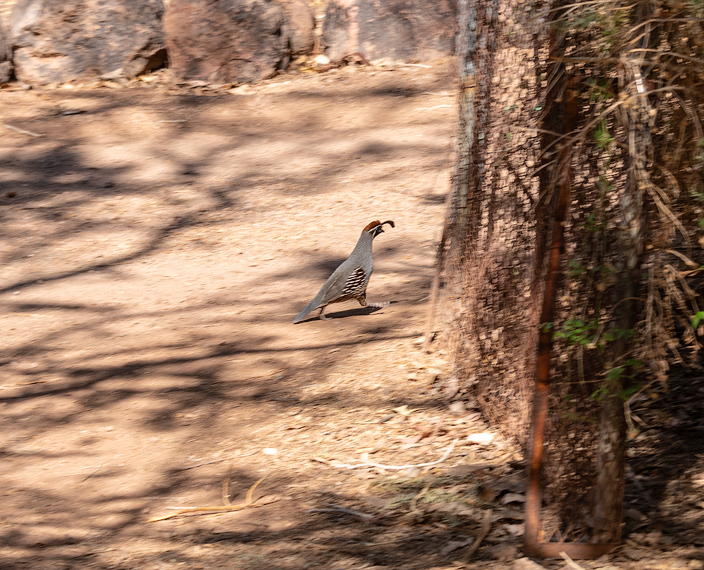
Look quickly — a quail, specifically a Gambel's quail. This variety is quickly identified by the topknot found atop the head of both males and females. Located in dry regions of the southwestern United States, Gambel's quail thrive in the dry-arid regions that contain an abundance of desert shrubs. Coveys of Gambel's are more apt to run than fly! Even in my community, I often see a single quail or even a quail family. I love seeing the little ones moving their legs as fast as they can just to keep up with the adults — so cute.
It is surprising that flowers can actually survive in the desert garden. And along with the flowers, you might note the pollen-gathering insect, looking for a meal.

This desert is not all sand and cactus. There are small streams, ponds, and other sources of water. Obviously, this would be a necessity for a colony of Native Americans living in the desert. Also, this is a memorable spot for me because I recall that Dale Chihuly had a small boat here, filled with a collection of his artistic glass figurines during one of his exhibitions at the DBG.

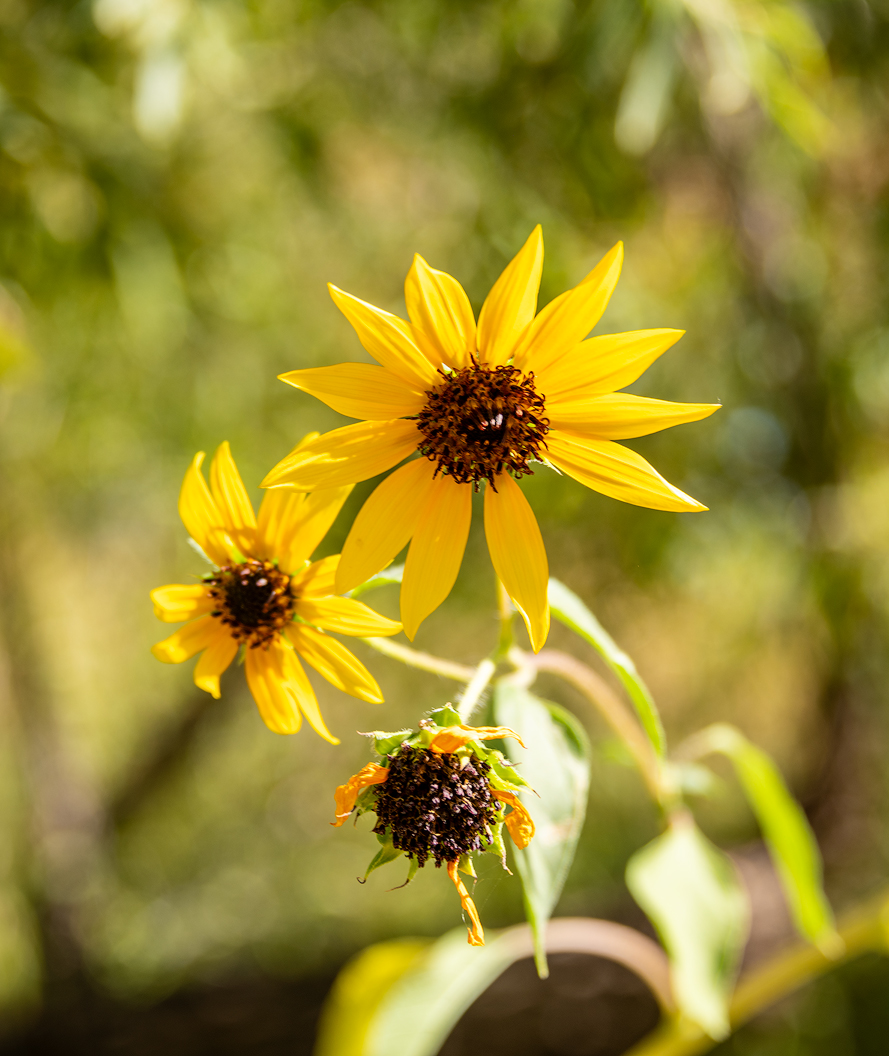
More lovely flowers, one of which appears to be going to seed.
Of all the desert-dwelling mammals, the desert cottontail is probably the one you will see most frequently. Preyed upon by everything from snakes to coyotes to owls, most cottontails are killed within their first year. These rabbits have few defenses other than good eyesight, good hearing, and the ability to flee quickly. They compensate for heavy losses by reproducing at a prodigious rate. Female cottontails can breed at 3 months of age and have multiple litters in a year. Young stay at the nest for only about 2 weeks before venturing off. These reinforcements make for a fairly constant supply of cottontails.

More flowers — and these are a bit unusual. I wonder what they are called.

Last, for today, we see a larger stand of marshland. It's not what I expect in a desert, but here it is.
