I reached the end of the indoor exhibits (or so I thought) and was enticed to step outside (in the blazing heat) to view a series of lifesize sculptures.
The first one is by Allan Houser, from the
Chiricahua (Warm Springs) Apache tribe.
It is called War Pony, crafted in Bronze.
It exemplifies the minimalist approach that Houser perfected in his later years and represents the fierceness and effectiveness of the horse as an instrument of war. The ability to be swift and mission-focused served both the Apache warriors and their rides in the 19th century.

Next up is a sculpture also by Allan Houser entitled Gift of the Earth crafted in bronze. The abstracted woman with a pot reflects influences from Diego Rivera and the Mexican muralists.

Here is another impressive bronze sculpture from Allan Houser entitled People of the Rio Grande. This piece honors the Pueblo people, who are presented as mysterious and more ethereal, in contrast to the earthy recumbent female forms for which the artist is also known.

You may recall the cradleboards we saw in last week's issue of LAHP. Here Allan Houser uses one as a key feature in his bronze sculpture Apache Cradleboard. As a reminder, cradleboards are iconic objects used by generations of Apache women and represent the importance of family and cultural traditions. The flow of the mother's wrap down and around the cradleboard conveys the protective tie between mother and child.

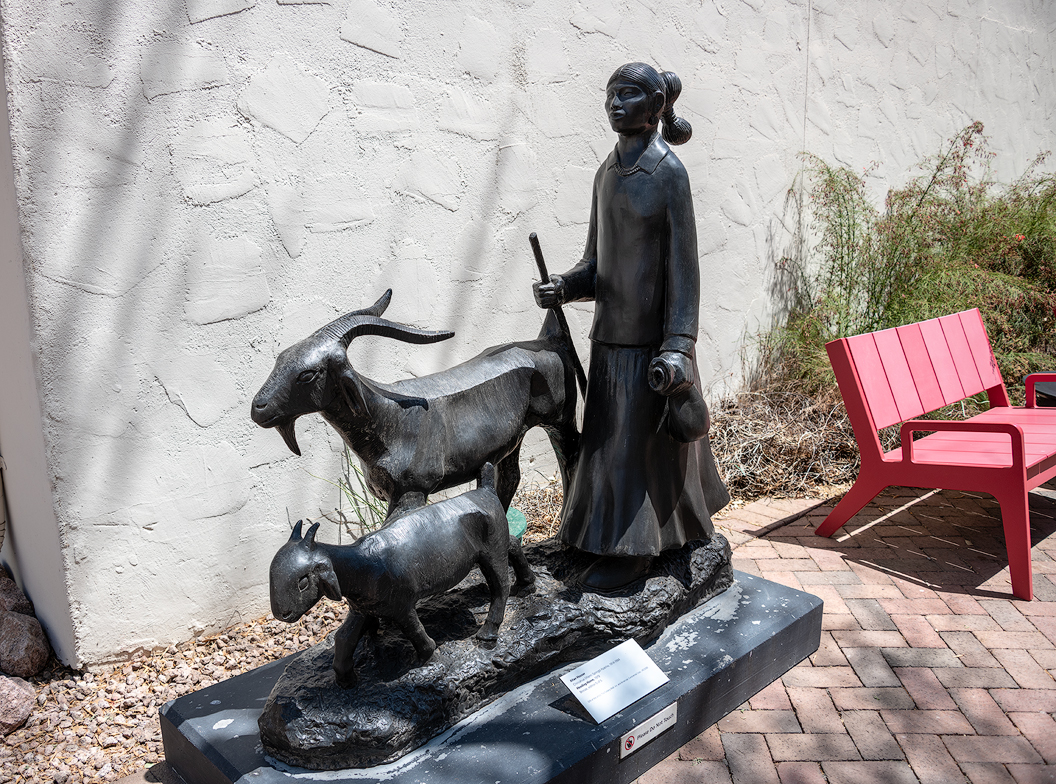
In this bronze sculpture, Heading Home, Allan Houser captures the image of a shepherd returning from the grazing fields with his goats.
Next up is an abstract bronze sculpture also by Allan Houser entitled Seeking Harmony. It makes me think of a futuristic design for a domed football or soccer stadium.

For a change of pace, we see a sculpture out of Indiana Limestone by Doug Hyde of the Nez Perce/Assiniboine/Chippewa tribe. It is entitled The Vigil - Mountains, Valleys, Mesas.

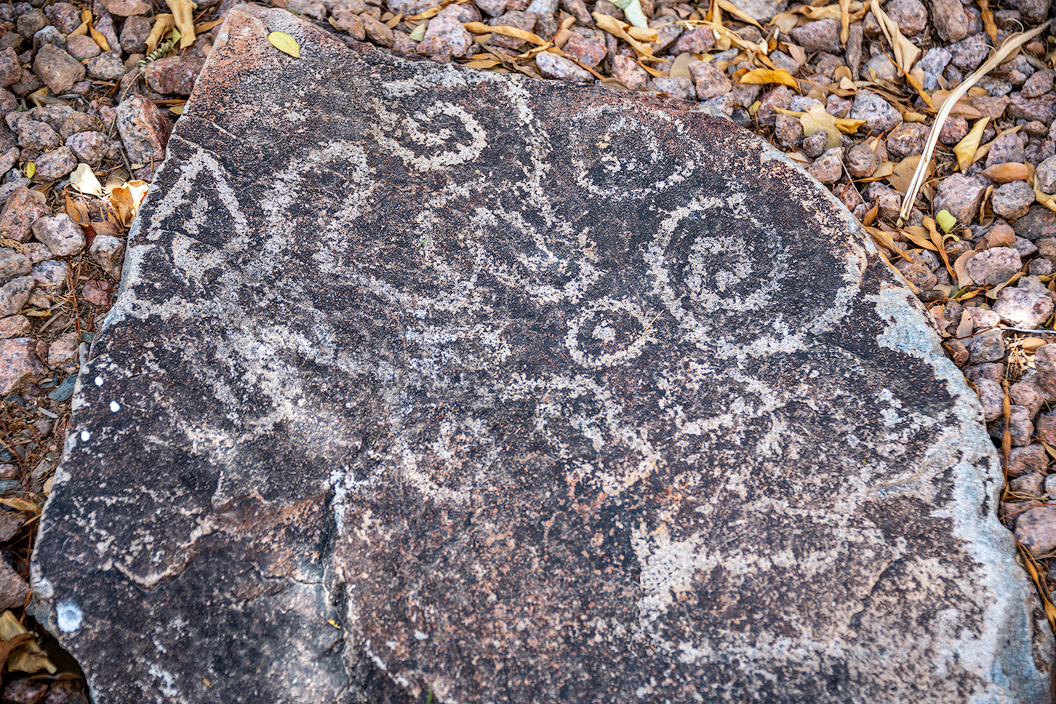
This next item is a petroglyph. There was no label so I don't know if it was an original or a replica. I live very close to the 48th Street entrance to South Mountain Park, where there are many real petroglyphs created years ago by the Indigenous peoples who lived in this area before the coming of the Europeans. If you would like to see some of them, drive into the parking lot from 48th Street and take the Desert Trail (immediately to the left of the parking lot). It is only 100 yards or so to the petroglyphs.
By now you recognize the name of the sculptor — Allan Houser here with his bronze work entitled Water Spirit Bird, 1980. This stylized piece represents avian essence in its elegant simplicity, depicting the Water Bird, an iconographic symbol associated with the Native American Church. The church has roots in Oklahoma dating back to the 1880s and blends traditional Native religious concepts with Christianity. Peyote meetings consist of an all-night ceremony, usually held in a tipi. At midnight, the participants are allowed to drink water, which is associated with life and healing. Often, fans are made from the tail feathers of the water bird, and these are used for healing.

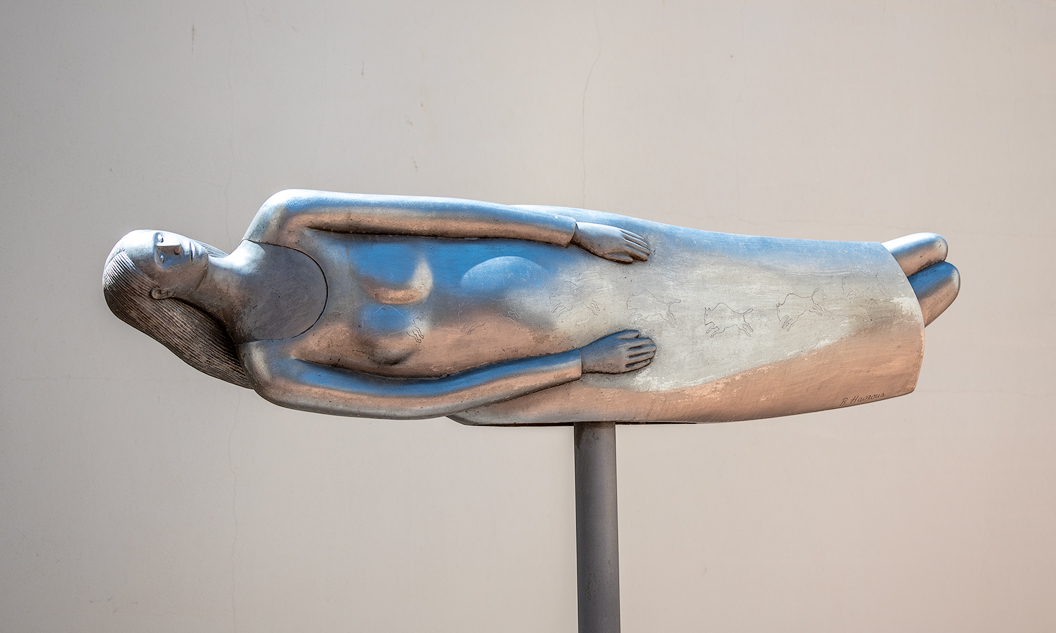
This sculpture is by Bob Haozous, from the Chiricahua (Warm Springs) Apache tribe. It is entitled Woman in Love and is made of Stainless steel. The artist humorously comments on human nature in this work. The horizontal figure "floats" in a daze, eyes closed, a smile on her face — in love. I also noticed a bulge in her abdomen, suggesting the love was physical as well as emotional. The surface is etched with buffalos, used by Haozous as a personal iconographic design element and a direct reference to the stereotypical, romanticized past of the Indian.
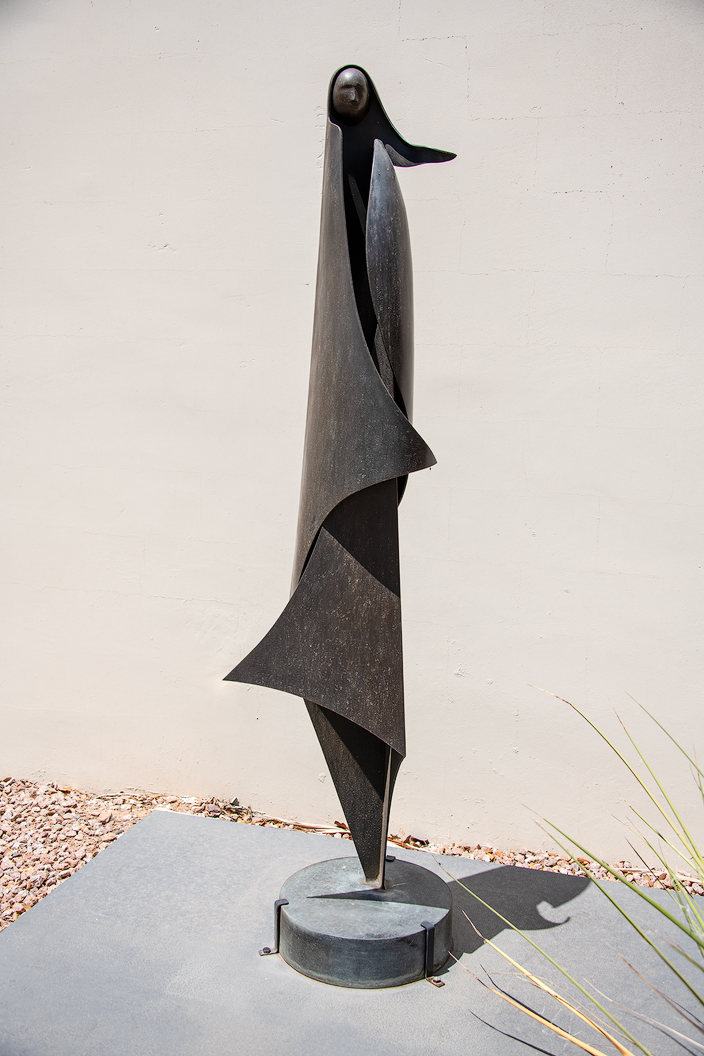
Allan Houser provides another bronze sculpture entitled Wind on the Mesa. This sculpture depicts a standing woman with her cape crisscrossing in an angular fashion in front of her body. Her hair is blowing to the side, as if by the wind. The artist used a highly simplified style throughout the sculpture.
This bronze sculpture is by John Hoover from the Unangan tribe. The piece is entitled Aleut Dance Staff. To my eye, it is very fluid and intriguing.
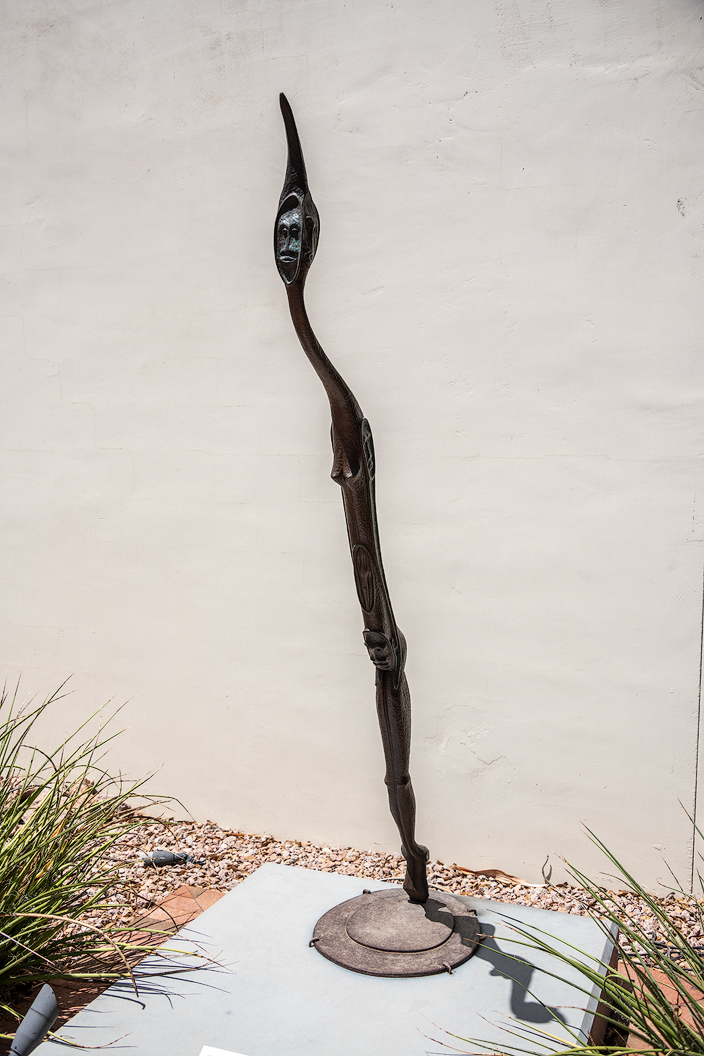
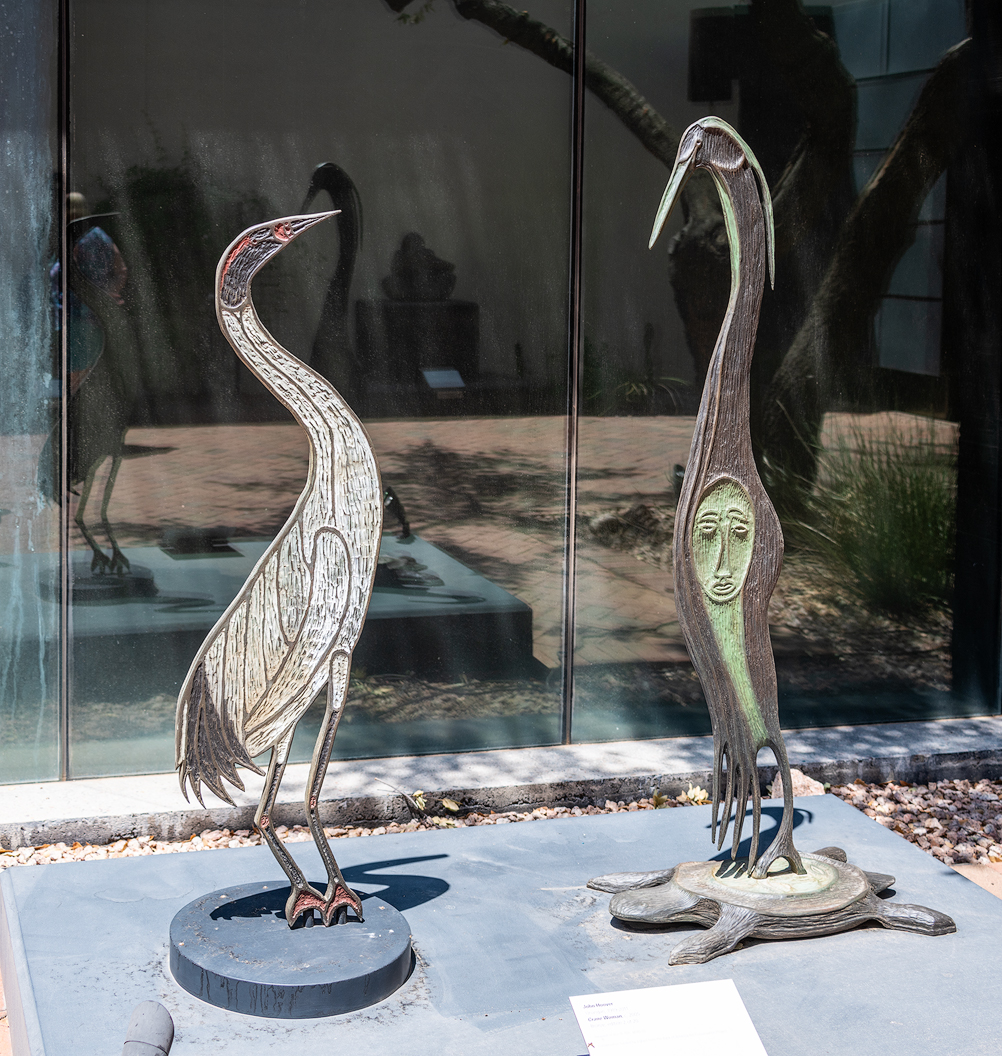
Here we have an interesting pairing of two bronze sculptures also by John Hoover, Crane Woman on the left and Heron and Turtle on the right. The two pieces go together so well — one of my favorites in the garden.
Unfortunately, the heat was getting the best of me — no more lingering, it was time to get back inside to air-conditioned comfort.