I moved to Phoenix in 1974 and quickly learned of the Heard Museum, but I never visited until this last Friday — shame on me. Their mission is to connect
Indigenous creativity to the world by presenting the voice and vision of American Indian artists. And they have done it well. There is so much art and history on display, that no matter how hard I try, it is impossible for me to share all of it — you must come and absorb as much as you can during your visit.
To start, there is contemporary art on the grounds which welcomes you to this wonderful place. This first piece is the American Indian Veterans National Memorial. One quote on the monument reads, "The story of American Indian warriors begins before there was a United States of America and the Warrior Tradition continues rich and strong today. Honoring Warrior leaders is also a tradition that is an integral part of the story. In this spirit, the Heard Museum joins with those who keep the honoring tradition and tell the stories of bravery and sacrifice."

This next sculpture is entitled Intertribal Greeting by Doug Hyde, Assiniboin/Nez Perce/Ojibwe tribe. I felt an instant connection to the artist because he was born the same year I was born.

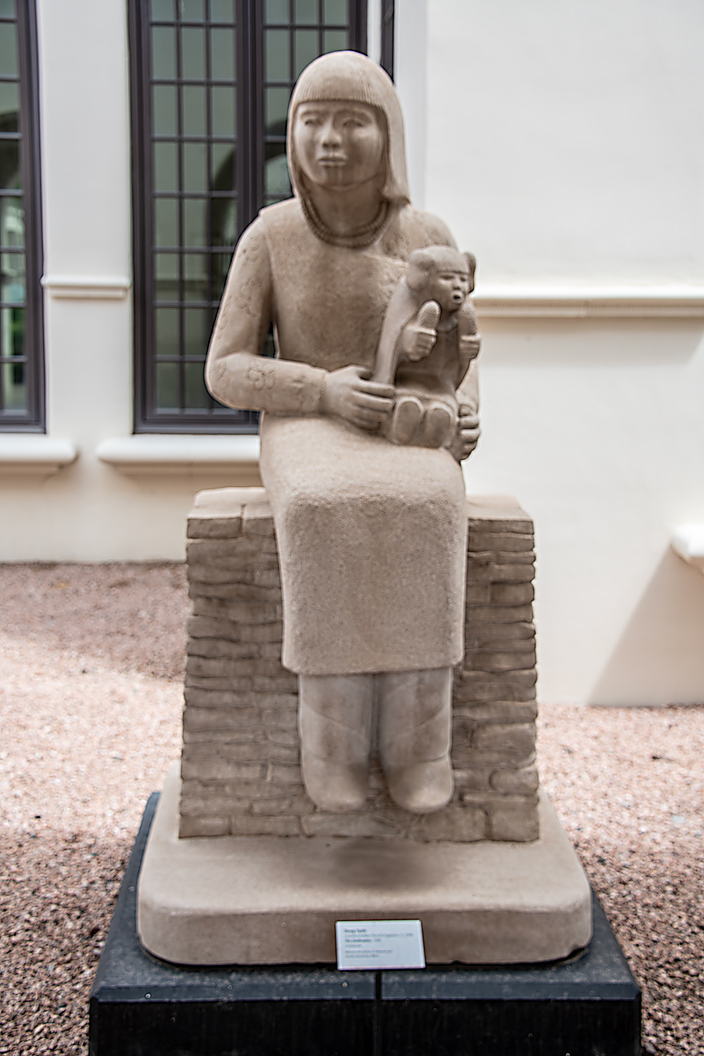
Here we see a native mother and child. I apologize for not capturing the title of the sculpture and the name of the artist. Shame on me again!
In the center of the complex is a delightful courtyard with beautiful landscaping and a wonderful water flow offering delights to the eye and the ear. However, since the temperature was about 105° F, I decided indoors was the place to be today. I plan to return during more comfortable temperatures and enjoy a relaxing snack and beverage in the Courtyard Cafe.

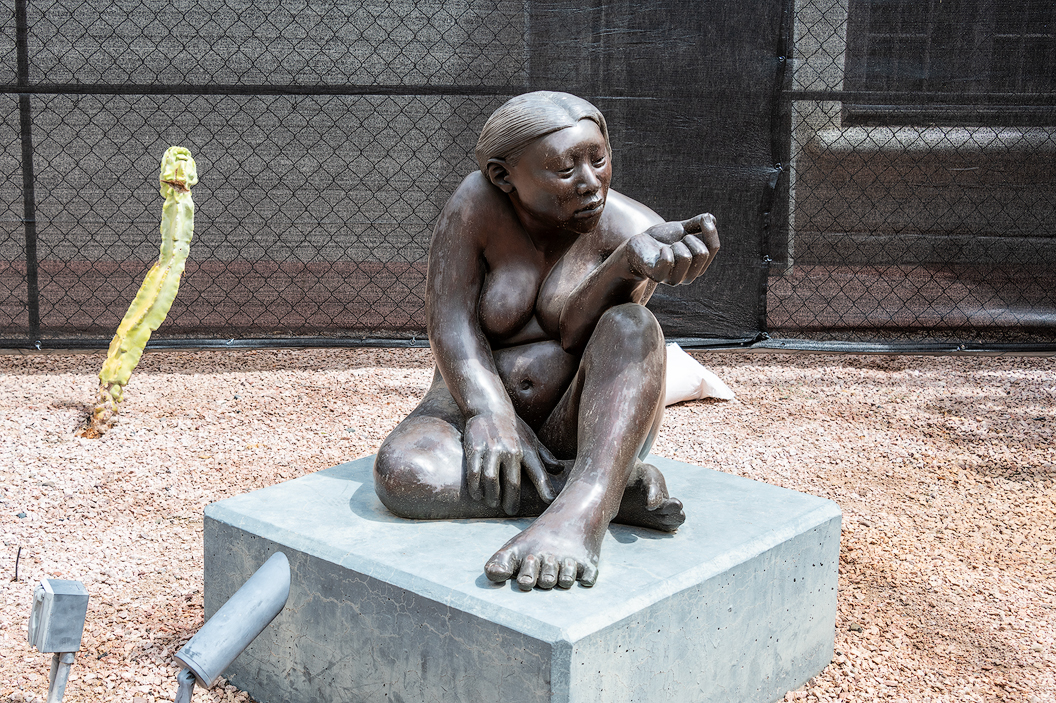
The next sculpture is entitled Window to the Past by Roxanne Swentzell of the Santa Clara Pueblo. From her website, "Roxanne Swentzell, Native American clay & bronze sculptor and contemporary pueblo artist with a gallery located near Santa Fe, New Mexico. Her figures represent a full range of emotions and irrepressible moods. Roxanne Swentzell focuses a lot on interpretative female portraits attempting to bring back the balance of power between the male and female, inherently recognized in her own culture. Additionally, she increasingly uses a powerful sense of humor to communicate. Though steeped in her own culture, Roxanne's work demonstrates an astounding universality, speaking to people of all cultures."
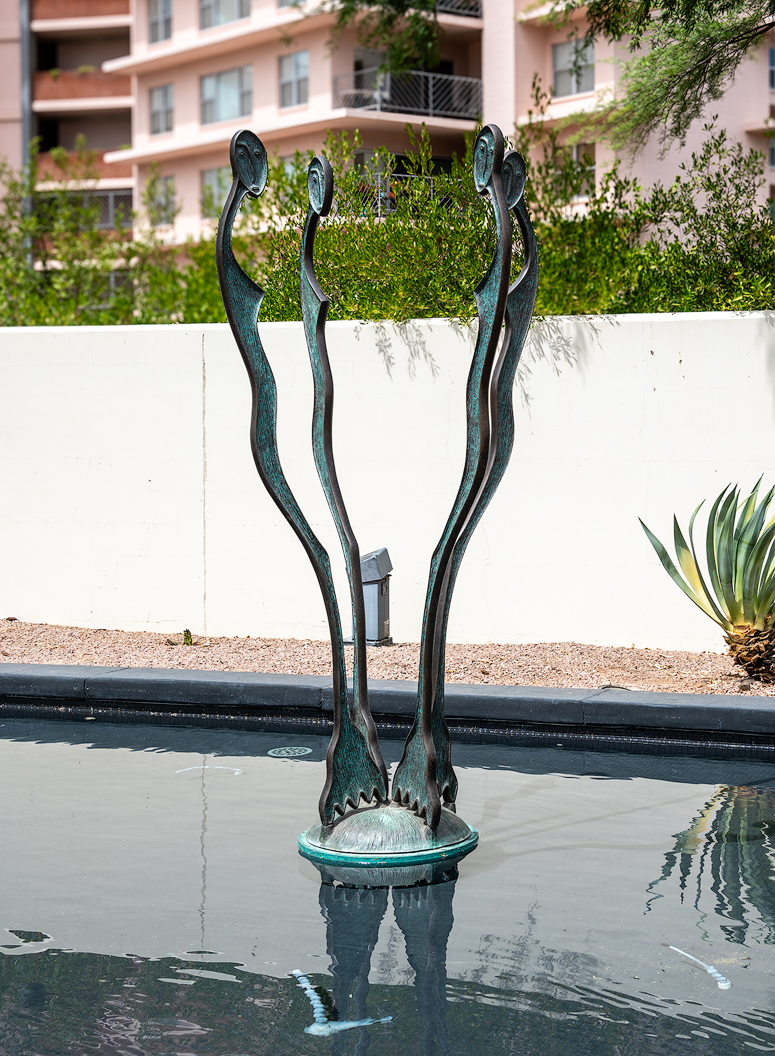
The next sculpture by the late John Hoover of the Unangan nation is entitled Sea Weed People. He was an American artist, known for his creation of contemporary art pieces based on Native Alaskan traditions. Hoover's work was exhibited internationally, and his artworks feature prominently in several Anchorage buildings such as the William A. Egan Civic and Convention Center, the Alaska Native Medical Center, the Alaska Native Heritage Center as well as the Heard Museum. I love the implicit gentle swaying of the Sea Weed People — I was mesmerized.
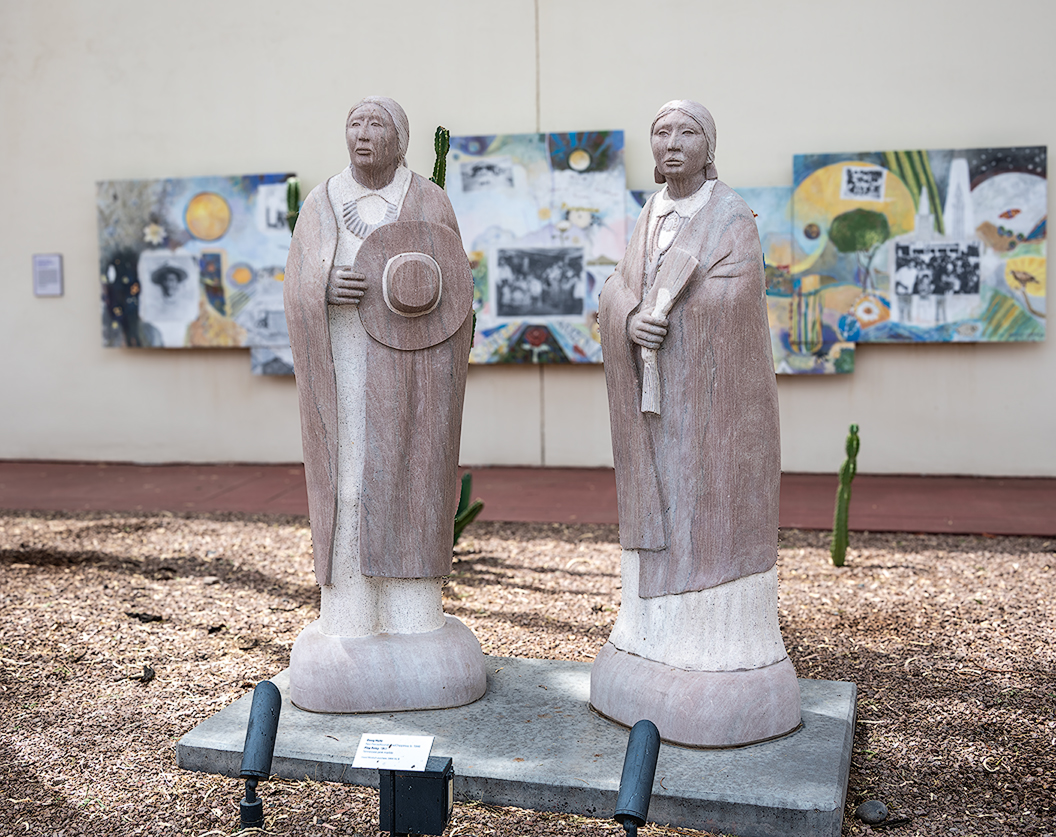
Next up is a work entitled Flag Song also by Doug Hyde. It is carved from Tennessee Pink marble. Wikipedia says, "For decades, Hyde has been a recognized leader among Native American artists. From images evoked by Indian lore to those reflecting the modern Native American, his work exudes emotion, strength, and beauty and resonates with his Native American heritage."
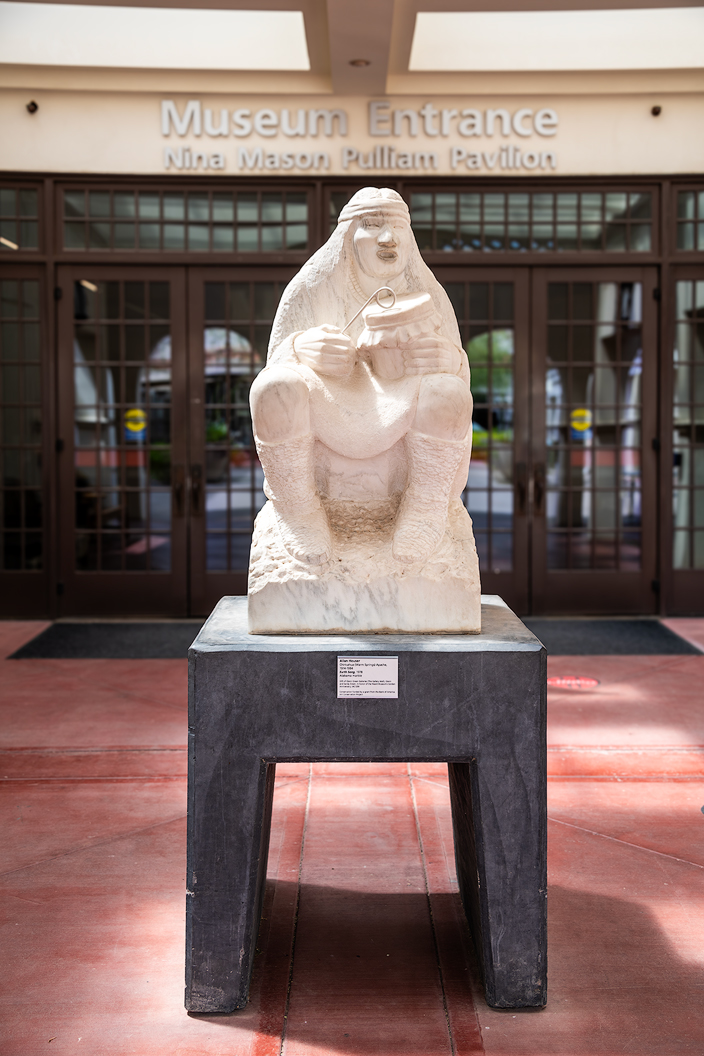
This next sculpture is entitled Earth Song by the late Allan Houser of the Chiricahua (Warm Springs) Apache nation. Renowned as both an exceptional artist and educator, Houser joined the faculty of the Institute of American Indian Arts in Santa Fe, New Mexico. There, he set up the sculpture department and honed his status as one of America's foremost modernist sculptors. While there he transformed Native American Art from the parochial to the monumental.
Inside the museum, we found both air conditioning (thank goodness) and the results of a challenge to Native American artists to paint canvas athletic shoes. Thus we see the results painted by Harlan Reano of the Santo Domingo/Kewa Pueblo paired with the Pueblo Warrior Trio sculpture created by Lisa Holt of the Cochiti Pueblo. This is one of the most imaginative artistic collaborations I have ever seen on display. (Please excuse the light reflections on the glass — there was no way for me to avoid them.)

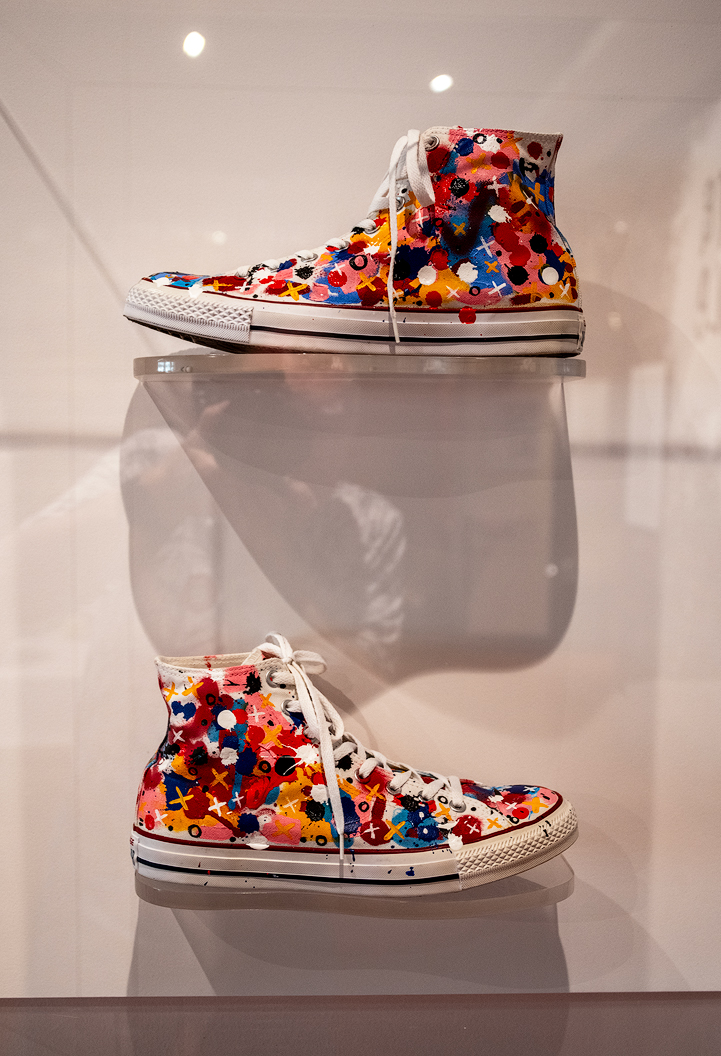
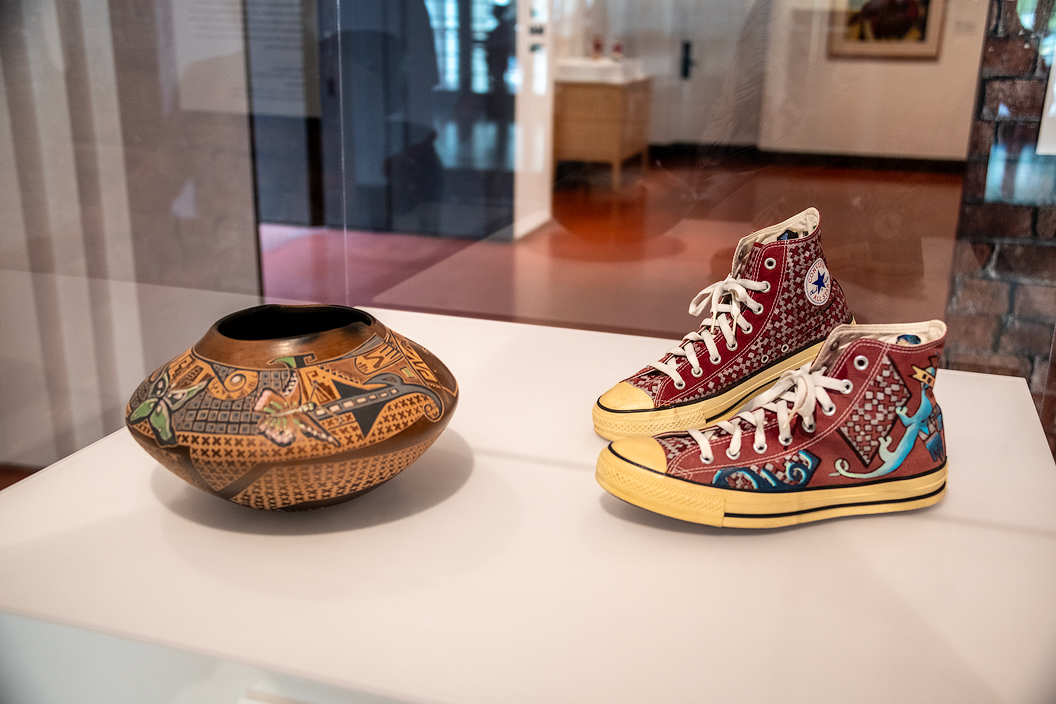
Next up is a contribution pair both created by Susan Folwell of the Santa Clara Pueblo. The ceramic bowl is untitled and so are the shoes that happen to have been Converse Chuck Taylor High Top All Star sneakers. Her large body of work ties in Native designs and history and has been used by Folwell to demonstrate her viewpoints on society and politics. Folwell has been described by the Heard Museum as an "innovator in Pueblo pottery".
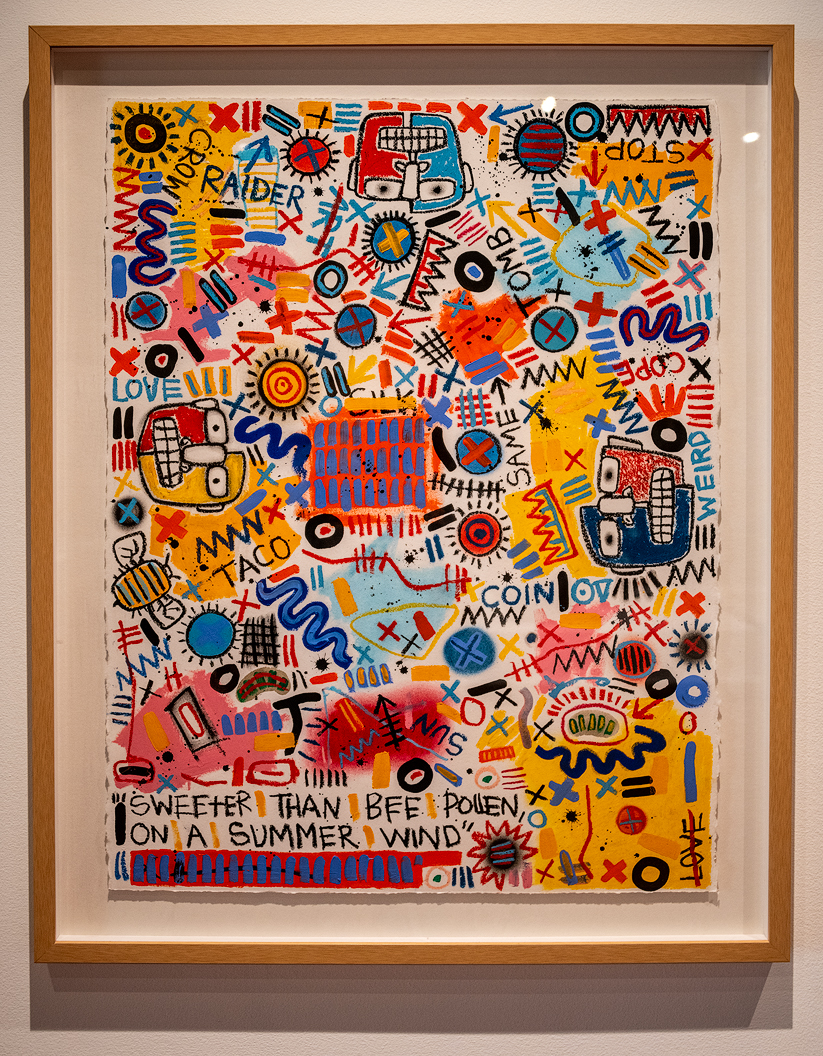
This painting is entitled Sweeter than Bee Pollen, On a Summer Wind. The artist is Phillip L.P. Vigil of the Jemez Pueblo, Jicarilla Apache Tribe. He is a fourth-generation artist based in New Mexico, he considers himself a visual artist, as his work encompasses a variety of media.
These are the accompanying athletic shoes by the same artist (Vigil) — the piece is untitled. He is a self-taught artist, having started creating art in 2006 and showing his work in art shows and galleries since 2009. His love of art began as a young boy when he realized that the paintings on the walls were done by his grandfather.