1967 Pontiac Firebird Convertible
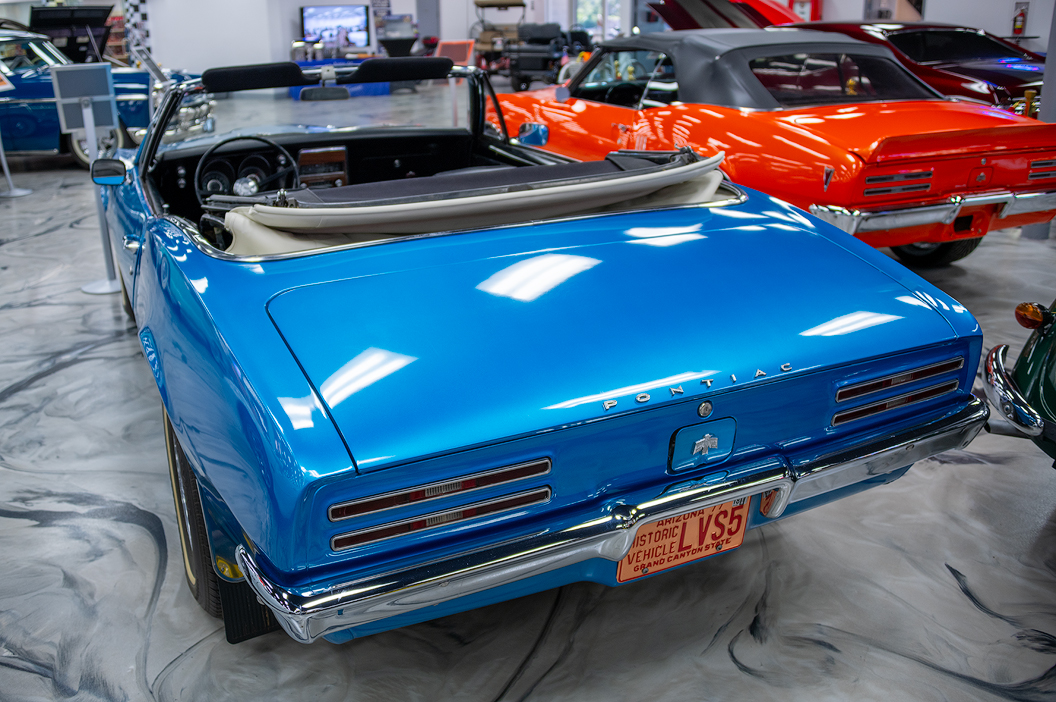
The first-generation Firebird had characteristic Coke bottle styling shared with its cousin, the Chevrolet Camaro. Announcing a Pontiac styling trend, the Firebird's bumpers were integrated into the design of the front end, giving it a more streamlined look than the Camaro.

The Firebird's rear "slit" taillights were inspired by the 1966-1967 Pontiac GTO. Originally, the car was a "consolation prize" for Pontiac, which had desired to produce a two-seat sports car based on its original Banshee concept car. However, GM feared this would cut into Chevrolet Corvette sales, and gave Pontiac a piece of the "pony car" market through sharing the F-body platform with Chevrolet.
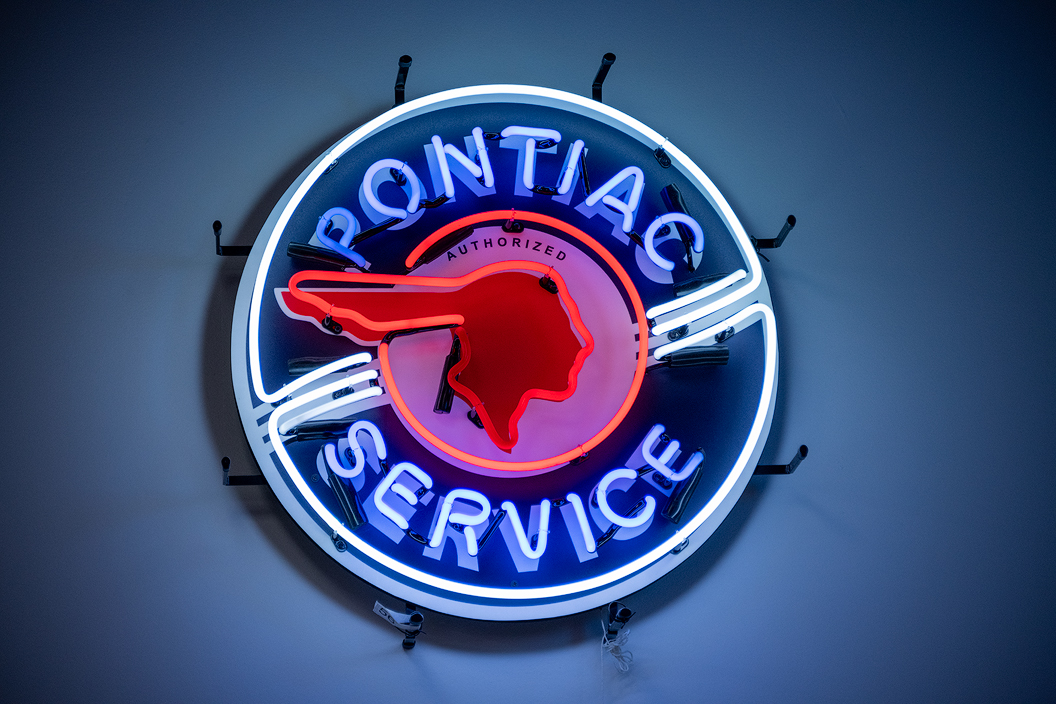
Here is another one of the popular neon signs — this one announcing Pontiac service.
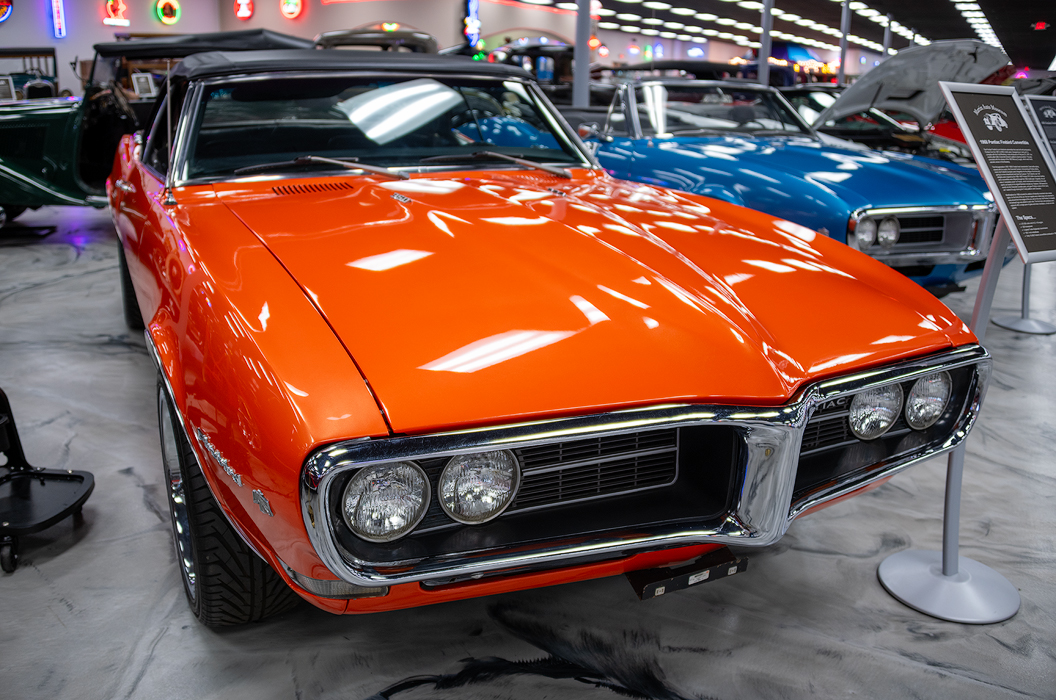
1968 Pontiac Firebird Convertible
The Pontiac Firebird is an American automobile that was built and produced by Pontiac from the 1967 to 2002 model years. Designed as a "pony car" to compete with the Ford Mustang. It was introduced on February 23, 1967, five months after GM's Chevrolet division's platform-sharing Camaro. This also coincided with the release of the 1967 Mercury Cougar, which was Ford's upscale version of the Mustang.
The first-generation (1967-1969) Firebird had characteristic Coke bottle styling shared with its cousin, the Chevrolet Camaro. Announcing a Pontiac styling trend, the Firebird's bumpers were integrated into the design of the front end, giving it a more streamlined look than the Camaro.
The Firebird's rear "slit" taillights were inspired by the 1966-1967 Pontiac GTO. Both a two-door hardtop and a convertible were offered through the 1969 model year. Originally, the car was a"consolation prize" for Pontiac, which had desired to produce a two-seat sports car based on its original Banshee concept car. However, GM feared this would cut into Chevrolet Corvette sales, and gave Pontiac a piece of the "pony car" market through sharing the F-body platform with Chevrolet.
Modifications for 1968 included the addition of federally-mandated side marker lights: for the front of the car, the turn signals were made larger and extended to wrap around the front edges of the car, and on the rear, the Pontiac (V-shaped) Arrowhead logo was added to each side. The front door vent windows were replaced with a single pane of glass and Astro Ventilation, a fresh-air-inlet system.

1928 Chevrolet Tudor Sedan Custom Resto-Mod
This 1928 Tudor Sedan customization was a 3-year father-and-son project car by Ben and Matthew Romanski. According to Ben, "the drivetrain and engine were updated to make this vehicle roadworthy while focusing on keeping the outside body and inside interior closer to original."
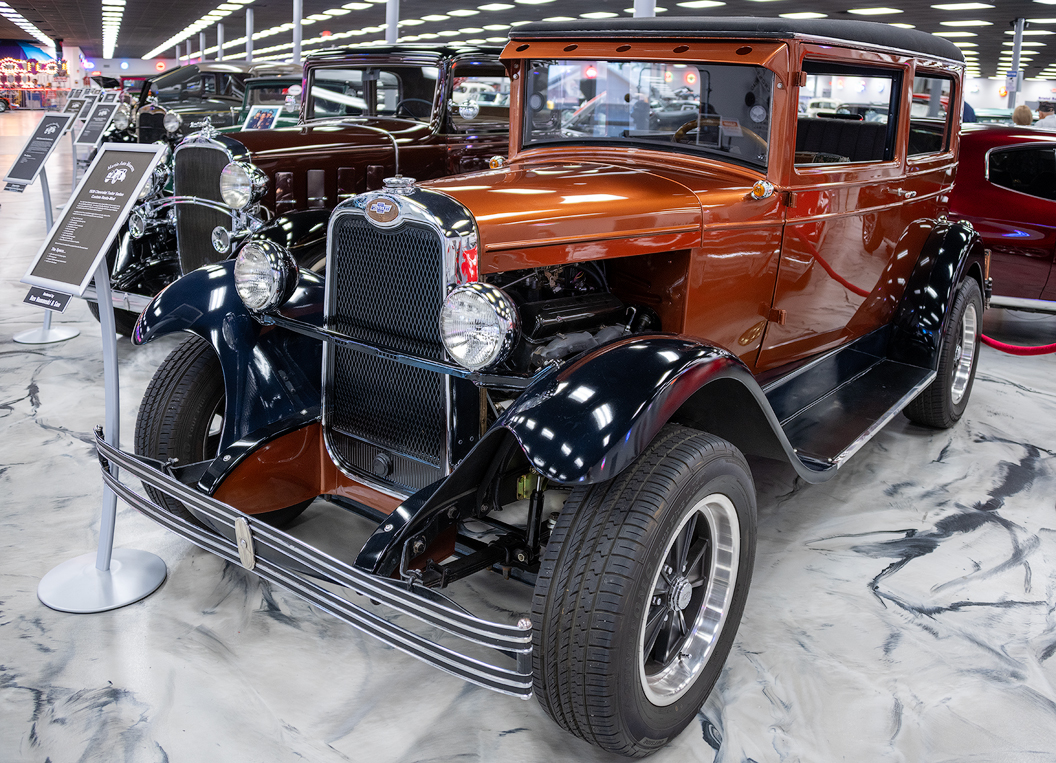
Here one can see the spare tire and trunk — so different from today's cars.
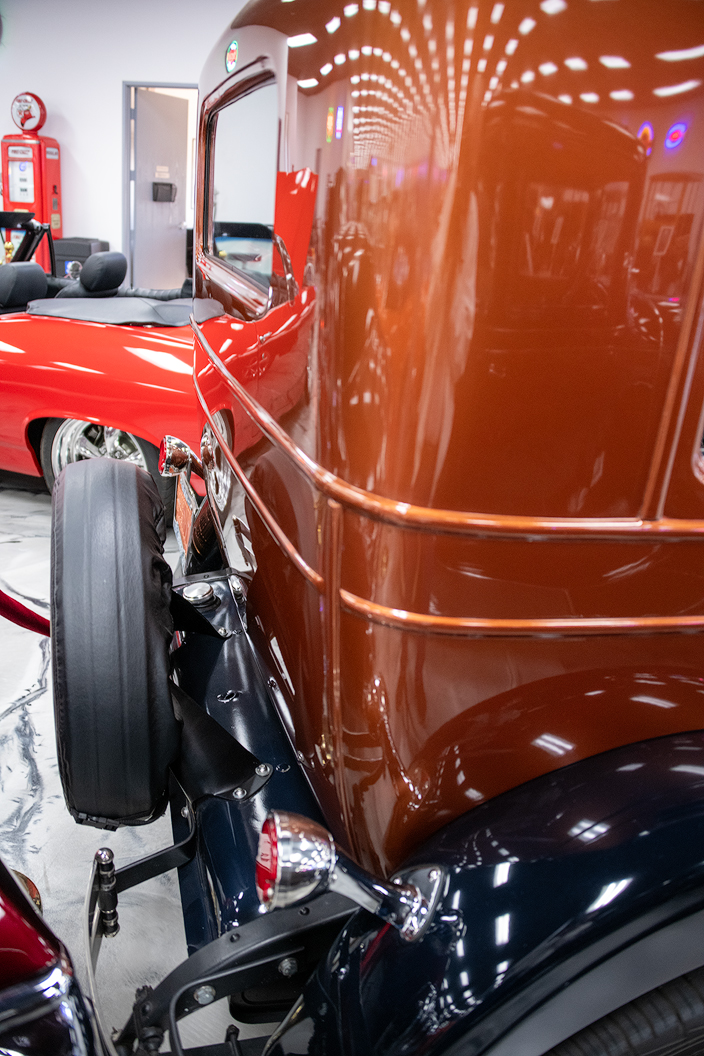
In addition to the Chevy small block engine that you can see, some of the modern touches they made to this beautiful resto-mod include:
- ChevyS-10 rear end
- Reverse Corvair steering box
- HEI Distributor
- Edelbrock 2-barrel carburetor
- Flow Master exhaust
- Rear drum brakes
- Front disc brakes
- E-Zwiringharness
- Classic instrument gauges
- Vintage air conditioning
- Boss Bluetooth and 4-Channel Amplifier

1932 Chevrolet Confederate
The Chevrolet Confederate was manufactured in 1932 to replace the 1931 Independence. Production slipped significantly from over 600,000 cars in 1931 to 313,395 in 1932 as the Great Depression continued, but was still sufficient for Chevrolet to retain first place in American car sales. Sales were also affected by cross-town rival Ford introducing the Ford V-8 coupe and sedan.
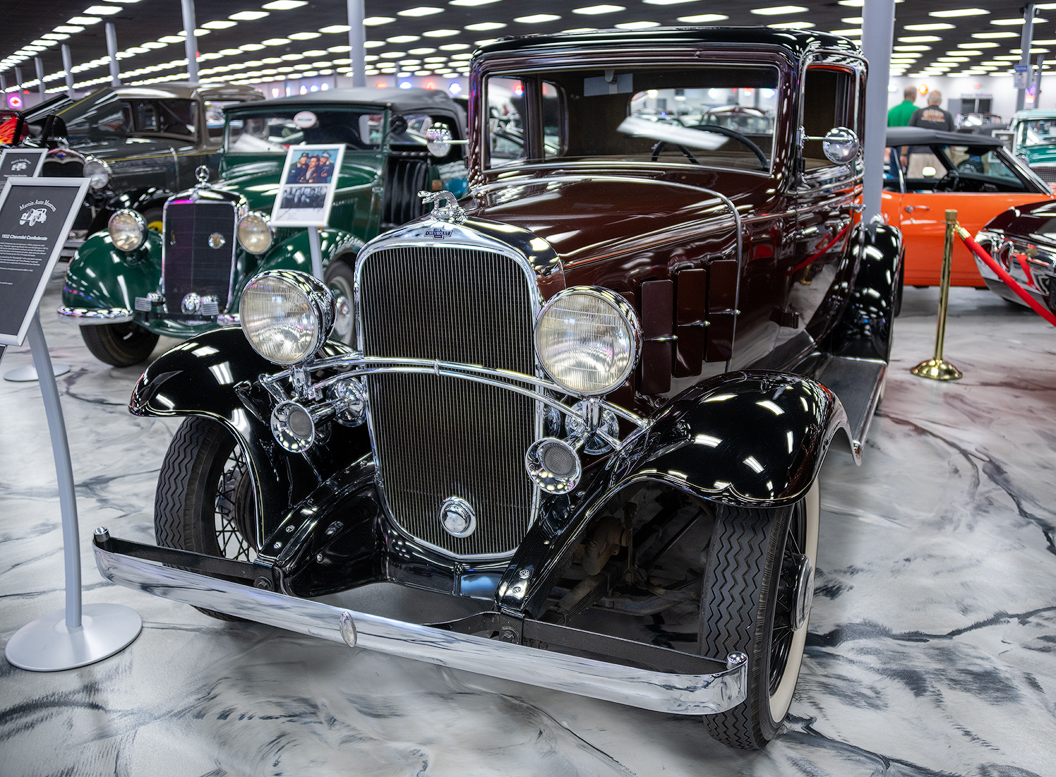
It seems that the really nice cars of this era required an attractive hood ornament. Those were the days.

The Confederate is powered by the "Stovebolt Six" with a downdraft carburetor. A three-speed synchro-mesh transmission with "Free Wheeling" mode was standard, which permitted the car to coast when the driver's foot was lifted from the accelerator.
This 1932 Chevrolet Confederate is all original and sold for $495 in 1932.

Hogan's Heroes Mercedes 4-Door Phaeton
This special car was used in the popular television sitcom "Hogan's Heroes", which ran for seven years (1965-1971). It is believed to be the Mercedes 260D staff car that often transported the show's character, Colonel Klink, played by Werner Klemperer.
The Mercedes 260D was one of the first passenger cars produced with Diesel engines. Nearly 2,000 were assembled between 1936 and 1940, after which the Daimler-Benz group had to devote itself almost entirely to military manufacturing.
I have to confess that "Hogan's Heroes" was one of my favorite programs back in the day. Also, note the sign on the right edge of the photo — where we can see Sargeant "I know nothing" Schulz together with Colonel Hogan.

Records indicate this car was rebuilt in 1951 and later refurbished for use in the comedy series.
The vehicle was donated by museum founder and president Mel Martin.
