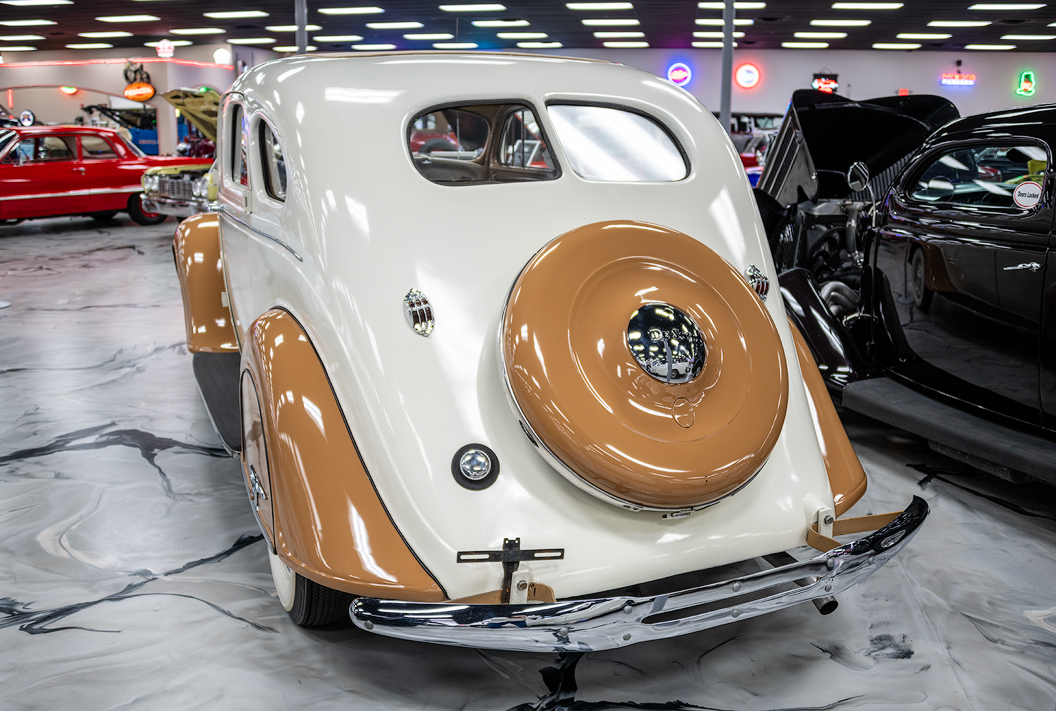
1934 DeSoto Airflow SE
The DeSoto Airflow was an automobile built by DeSoto during model years 1934, 1935, and 1936. DeSoto received the then-revolutionary Airflow model due to its price structure relationship to larger and more expensive Chrysler brand cars.

The Carl Breer-designed Airflow was ahead of its time in terms of aerodynamics. The design was revolutionary for the 1930s. The design of the vehicle came about after many hours spent in wind tunnels. Orville Wright, an aviation expert, was called upon to help design a vehicle that achieved aerodynamics like an airplane. Lightweight, rigid materials were used to help complement the vehicle's design. A prototype called the Trifon Special was constructed in 1932. In 1934, the production model was completed and ready for sale as both Chrysler and DeSoto models. The 1934 Airflow models are noted for their unique styling — particularly for the large grill that extends from the hood to the bumper.
1936 Ford Model 68 Tudor Sedan Custom
The one-year-only styling of the 1936 Ford Tudor Sedan combines the traditional upright grille with a streamlined body to create one of the best-looking cars of the period, no matter the manufacturer. This rare 1936 Ford Tudor Sedan with its integrated trunk is a neat 2-door pre-war car that shows off all of Ford's early styling cues. Only 20,515 Tudor Sedans were produced in 1936.
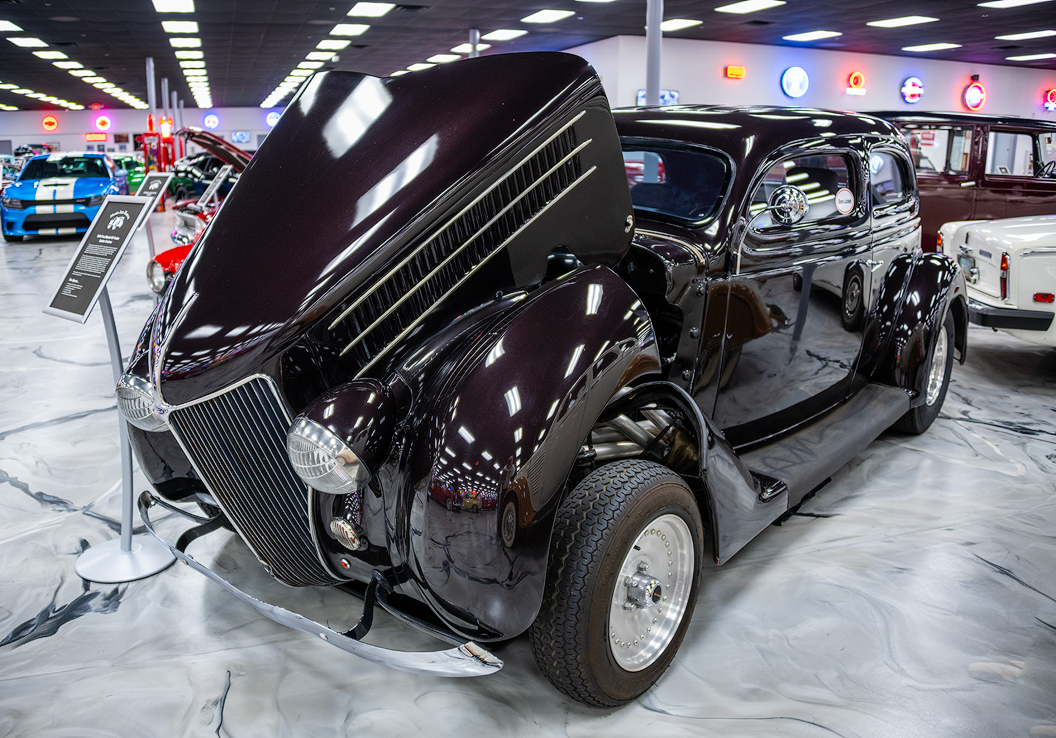
This car is fully customized from top to bottom, front to back by local auto builder and collector Alexander "Ski" Orzechowski. The original 221 cubic-inch inline 8-cylinder engine was replaced with the modern power of a 454 cubic-inch V-8. Other performance improvements under the tilt hood include a B&M blower, custom headers, a Holley fuel system, Turbo 400 transmission, MSD ignition, and much more. Other modern equipment includes rack and pinion steering, rear four-link suspension with coil-over shocks, B&M shifter, Auto Meter gauges, 12-bolt locker rear end, and 16-inch-wide rear wheels with Mickey Thompson racing tires.
This beautiful car has a classic deep black paint job and a custom interior with a modern tilt steering column.
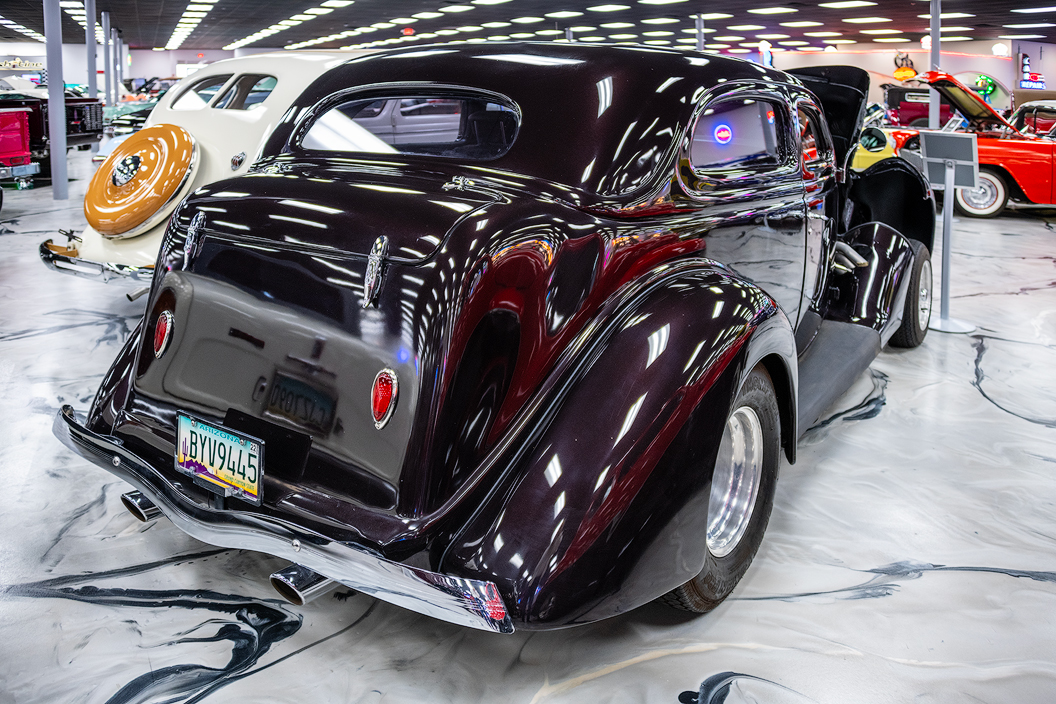
1946 Mercury Eight Coupe Custom
The Mercury Eight is an automobile that was marketed by the Mercury division of Ford between 1939 and 1951. The debut model line of the Mercury division, Ford slotted the full-size Mercury Eight between the Ford Deluxe (later Custom) model
lines and the Lincoln. In total, Ford assembled three generations of the Eight (before and after World War II).
During its production, the Eight offered a full range of body styles, including coupes, sedans, convertibles, and station wagons. For its first generation, the Eight was produced with its own body, adapting its own version of a Ford body for its second generation; for the third generation, the Eight shared its body with the Lincoln.
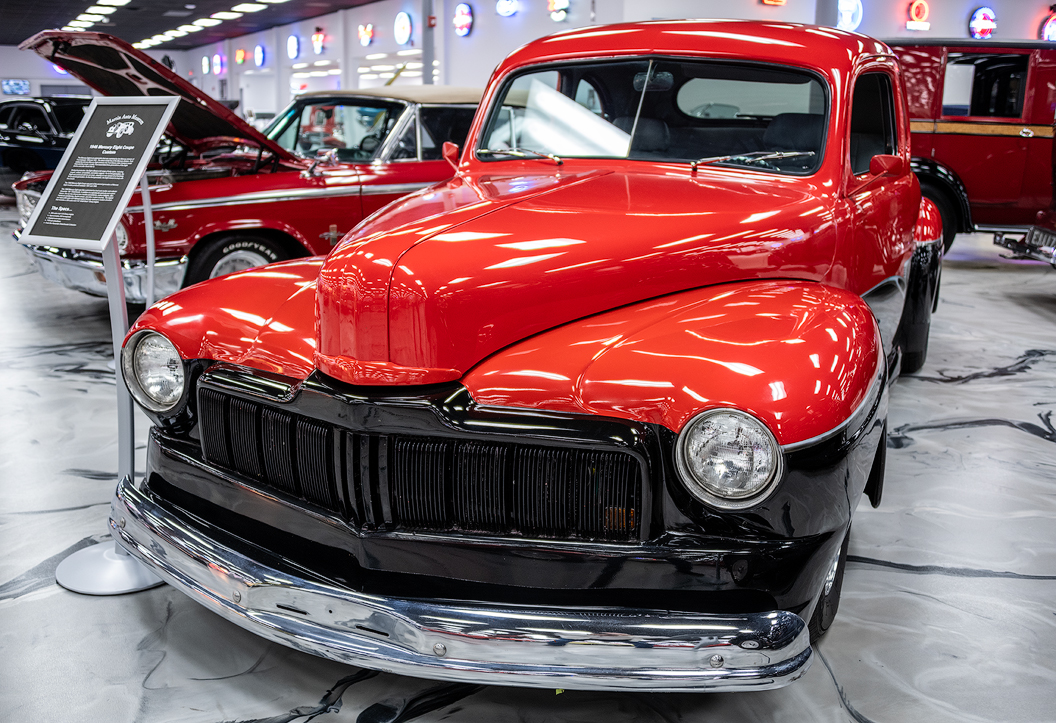
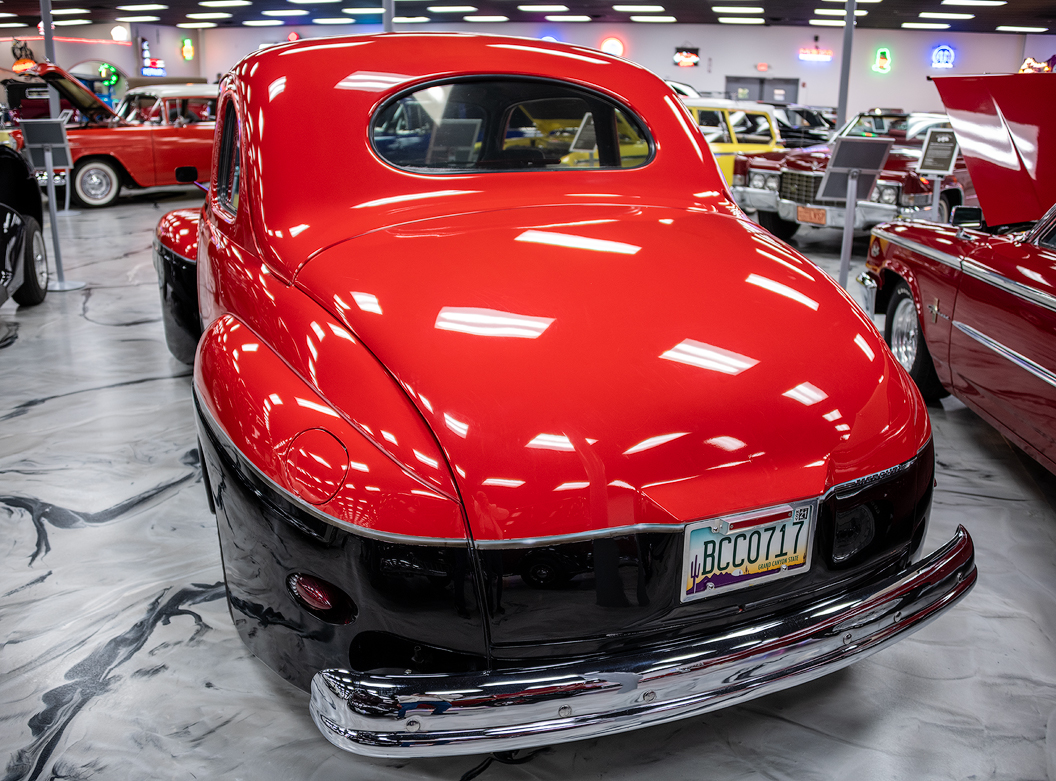
The 1946 Mercury Eight Coupe was part of the second generation of Mercury Eight models produced between 1941 and 1948.
This 1946 Mercury Eight was fully customized by local auto builder and collector Alexander "Ski" Orzechowski. In addition to a spectacular paint job and custom interior, this car has shaved door handles and antenna, custom taillights, after-market air conditioning, Budnik wheels, and other modern touches. The original car had a 239 cubic-inch flathead engine that was replaced by a modern drivetrain that includes a 350 cubic-inch V-8 "small block" Chevy engine.
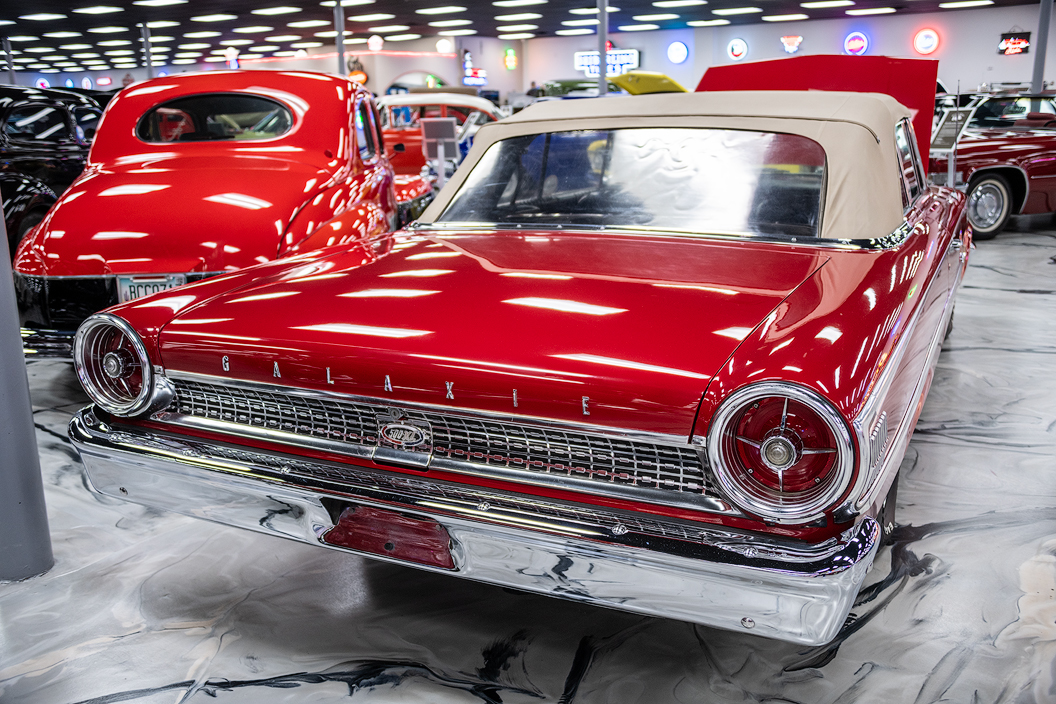
1963 Ford Galaxie 500/XL Convertible
The Ford Galaxie is a full-sized car that was built in the United States by Ford for model years 1959 through 1974. The name was used for the top models in Ford's full-size range from 1958 until 1961, in a marketing attempt to appeal to the excitement surrounding the Space Race. In 1958, a concept car was introduced called "la Galaxie" which incorporated the headlights into pods in line with the grille and a reduced front profile.
Starting with 1962, all full-size Fords wore the Galaxie badge, with "500" and "500/XL" denoting the higher series. The Galaxie was the competitor to the high-volume full-sized Chevrolet Impala and the Plymouth Belvedere.

The 1963 model was essentially unchanged from the previous year, except for some added trim and a reshaped windshield. Also, a four-door hardtop 500/XL was added. A lower, fastback roofline was added mid-year to improve looks and make the big cars more competitive on the NASCAR tracks with less drag and reduced aerodynamic lift at high speed.
Of the 535,256 Ford Galaxie cars produced in 1963, only 18,551 were 500/XL convertibles. The original price of this car was $2,925.
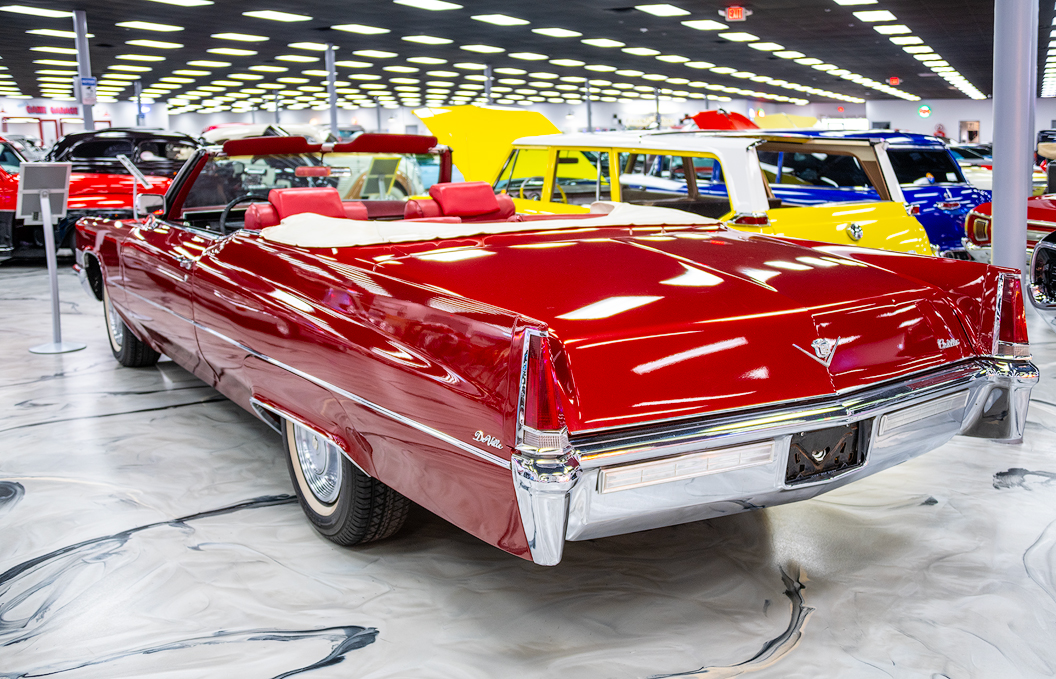
1969 Cadillac DeVille Convertible
DeVille is the nameplate used by Cadillac over eight generations — originally used to designate a trim level of the 1949 Cadillac Series 62 and later to designate a stand-alone model in the brand range. The last model marketed specifically as a DeVille was the 2005 full-size sedan, at the time, Cadillac's largest model.
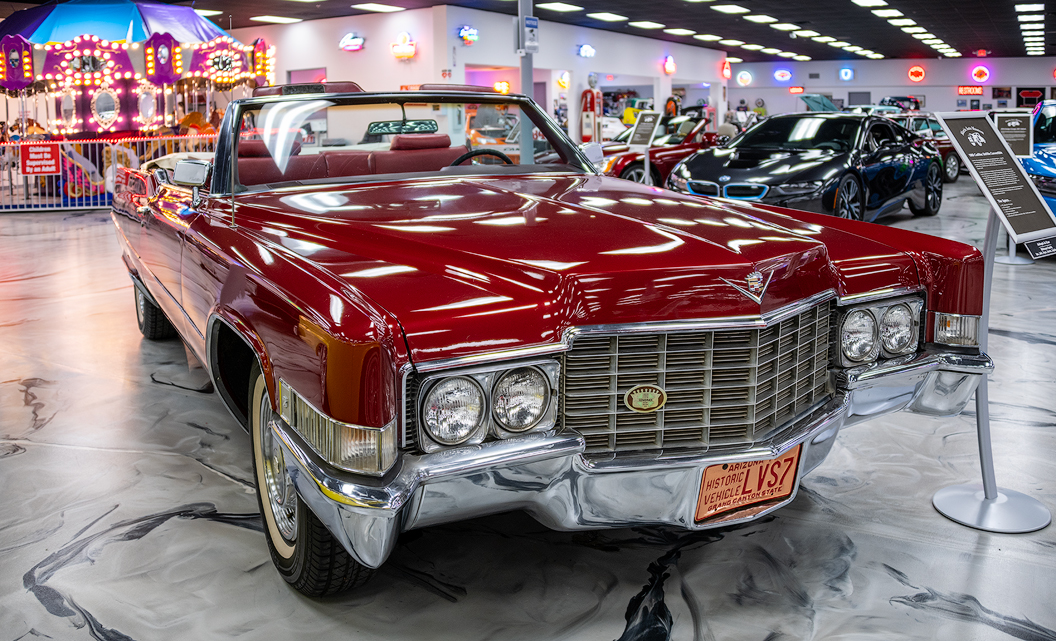
In 1969, the DeVille was restyled in the Eldorado image. An Eldorado-like front fender treatment evolved and helped to emphasize a stronger horizontal design line. Rear quarters were extended to give the car a longer look. There was an all-new grille with dual horizontal headlamps positioned in the outboard step-down areas of the grille. The hood was again extended, a total of 2.5 inches to add the impression of extra length. The roofline was squarer and the rear deck and bumper more sculptured. A new ventilation system eliminated the need for vent windows, which provided a longer sleeker look and improved visibility. The ignition switch was moved from the instrument panel to the steering column and included a steering wheel and transmission lock, one year ahead of a mandated Federal standard.
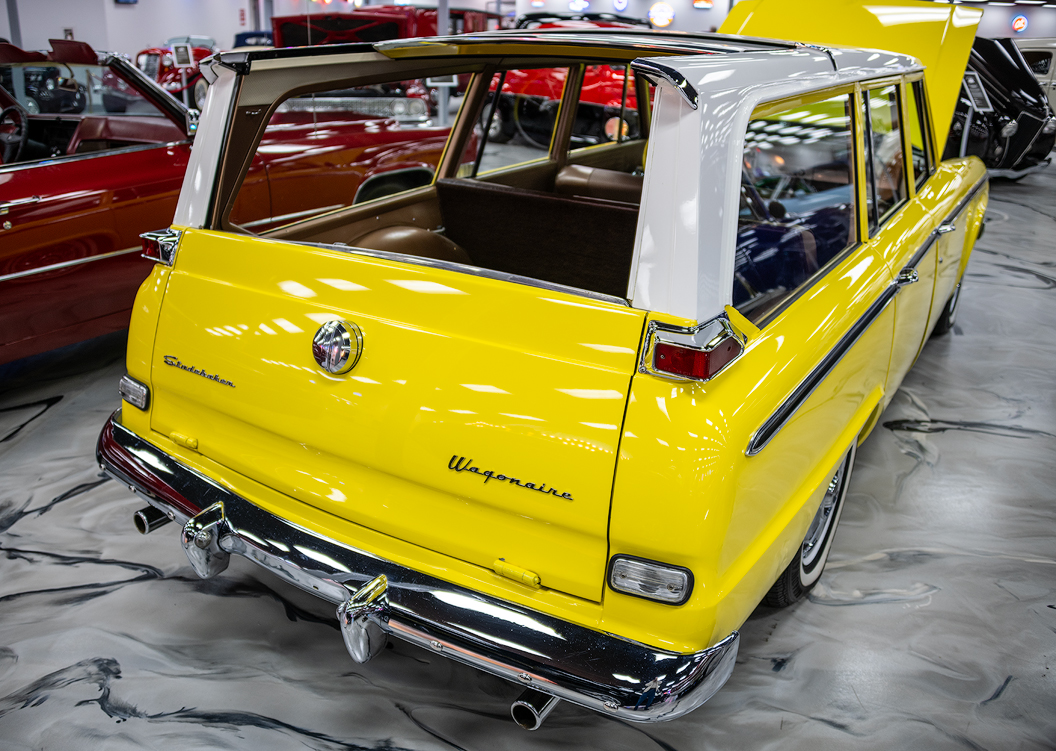
1965 Studebaker Wagonaire
Despite the financial woes that Studebaker faced from the mid-1950s through their closing in 1966, they produced some of the more innovative cars of the time. One of those pioneering designs was the Wagonaire, produced from 1963 to 1965.
The Wagonaire featured a distinctive rear roof that slid forward, greatly
expanding the cargo space. Studebaker advertising promoted their unique roof feature showing families loading up the open cargo area with kids, dogs, and even a playground slide. Another feature is the drop-down step on the rear tailgate &mdah; a characteristic on modern GMC trucks called "innovative" even though Studebaker featured this more than 40 years earlier.
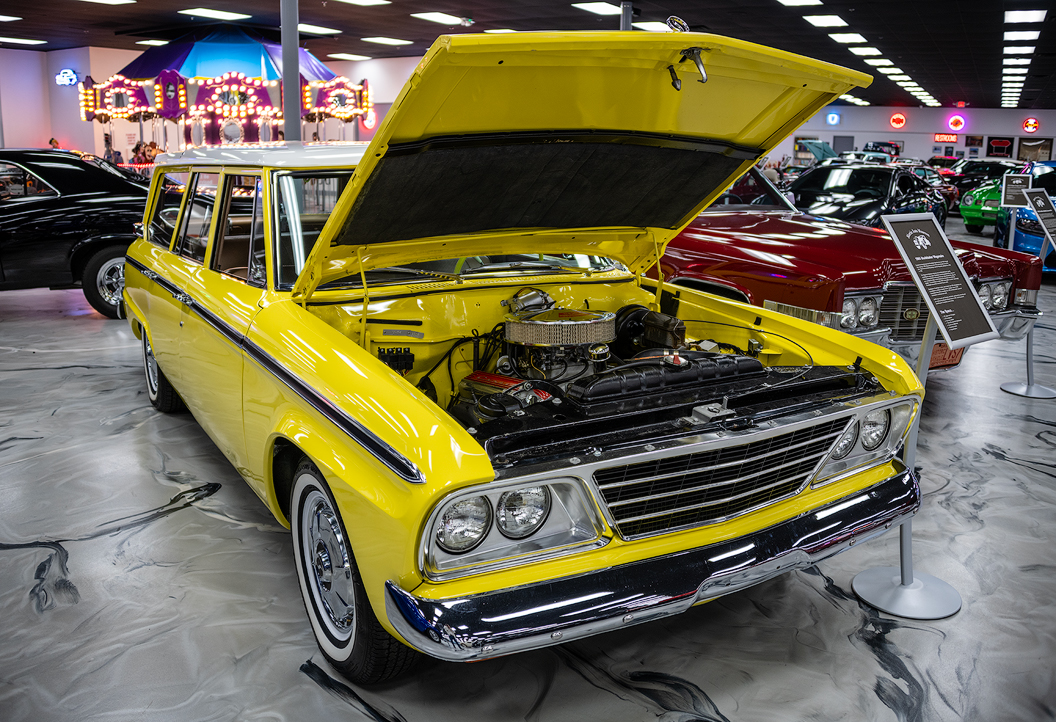
Studebaker's South Bend, Indiana, plant closed in late 1963 and production was consolidated to a facility in Hamilton Ontario, Canada. Nearly 12,000 Wagonaires rolled off the assembly line in 1963, but that couldn't counteract Studebaker's continued sales spiral.
NOTE: Our founder and Chairman, Mel Martin, purchased this interesting and rare vehicle at the Glendale Mecum Auction in 2021, with the proceeds benefitting the Curing Kids Cancer charity.