1947 Chrysler Town & Country Sedan
Ford was not the only maker of wood-bodied automobiles. Chrysler's Town & Sedan was first manufactured from 1940 to 1942, but production was suspended during World War II.
In the immediate post-war era, the American public was eager to return to normal life. Automakers struggled to keep pace with demand, especially with a shortage of raw materials. But Chrysler had a bit of a headstart because they envisioned a wood-bodied Town & Country in 1941.

The Town & Country was built using structural wood of white ash with contrasting panels of rich Honduran mahogany. The wooden body parts were supplied by Pekin Wood Products from Helena, Arkansas, and were then shipped to Chrysler's Jefferson Avenue plant in Detroit for final fitting and assembly. The wooden framing was built from straight-grained ash, and then hand fit, as every compound curve and wood-to-metal interface had to be created by hand. The roof, however, remained solid steel.
In 1947, only 2,651 Chrysler Town & Country Sedans were produced. The Town & Country continued production until 1988.

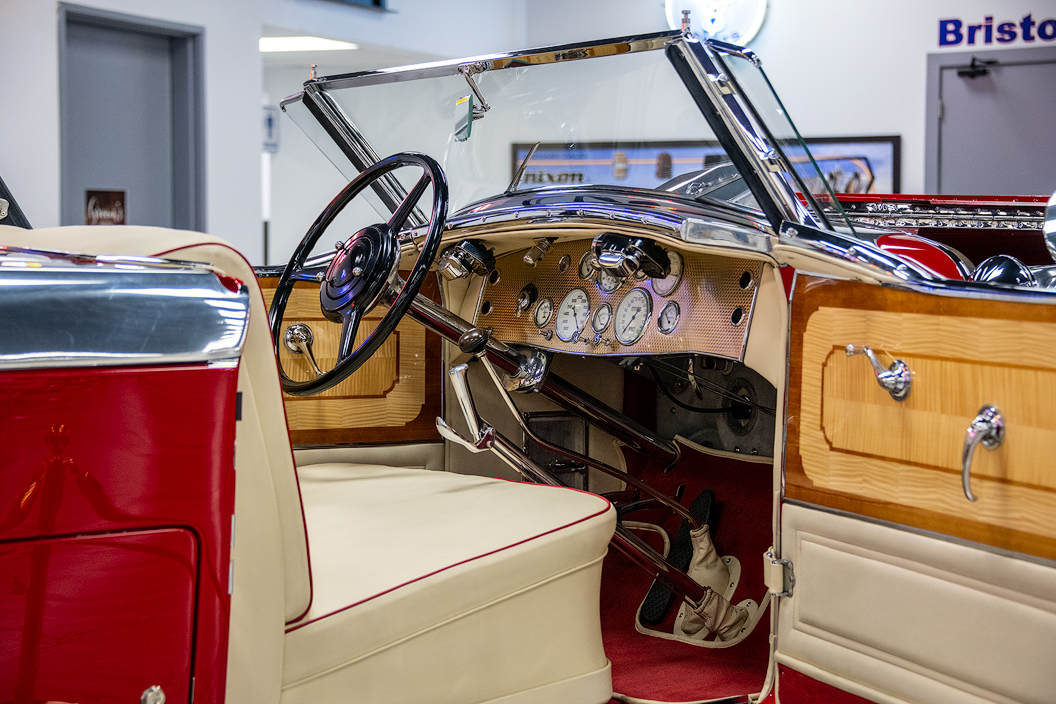
1930 Duesenberg Model J Torpedo Convertible Boattail Speedster
Duesenberg set out to build a car that would compete with the most powerful and luxurious cars of Europe. Known as the Model J, this car represented the finest in American craftsmanship, engineering, and elegance. When it was unveiled at the New York Auto Show on December 1, 1928, the introduction of the Model J was such an important event that trading was halted on the New York Stock Exchange. It was not only the most expensive car in America, it was also the fastest and the most technologically advanced car available.

The Model J instantly became a status symbol among the wealthy and famous. Gary Cooper, Al Capone, Jake "The Barber" Factor, Clark Gable, Greta Garbo, Howard Hughes, and Mae West were some of the famous Duesenberg owners. The most infamous person to own this Duesenberg was John Factor, a Prohibition-era gangster and con artist affiliated with the "Chicago Outfit" and Al Capone. Known as Jake the Barber, he later became a prominent businessman and owner of the Stardust Resort and Casino in Las Vegas. Weeks after his staged kidnapping, John Factor turned up, claiming to have escaped from the kidnappers.

More recently, this car underwent a four-year restoration by Kevin and Jason Marsh of Utah. Utilizing a combination of original and reproduction components, top Duesenberg experts assisted in the recreation of this elegant car. This Duesenberg has been driven only 75 miles since restoration.
I love this car. It was sitting on a turntable slowly rotating so I could see and savor every visible detail of this fabulous automobile. In fact, if they had offered me my choice of any of the cars in the museum, I would choose this Duesenberg. Who wouldn’t? Imagine riding around town as everyone would turn their head to look at the car and wish they could ride in it.
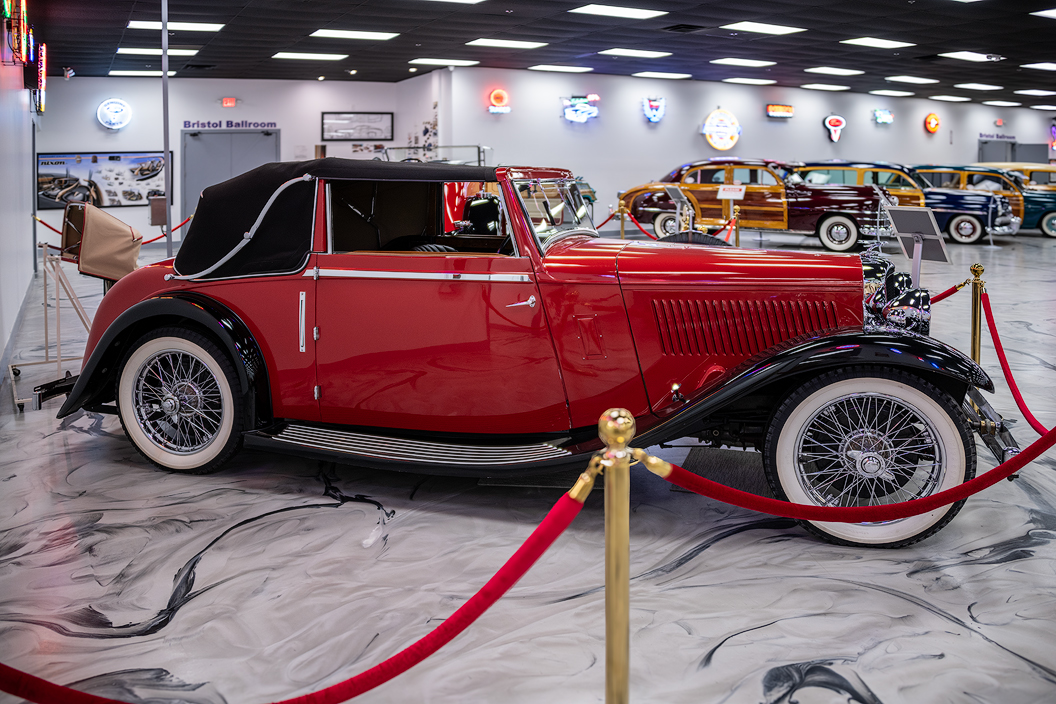
1936 Alvis Firebird Drophead Coupe
The Alvis Firebird was a British touring car made between 1935 and 1936, — only 449 were made. The car has an aluminum body on an ash wood frame. As with other Alvis cars, the Firebird was built as a rolling chassis and then sent to the coachbuilders, Cross & Ellis, to be finished to the customer's requirements — so all Alvis Firebirds are unique.

In 1939, World War II halted Alvis car production to make aircraft engines. A German Luftwaffe bomb destroyed the Alvis car factory in 1940.
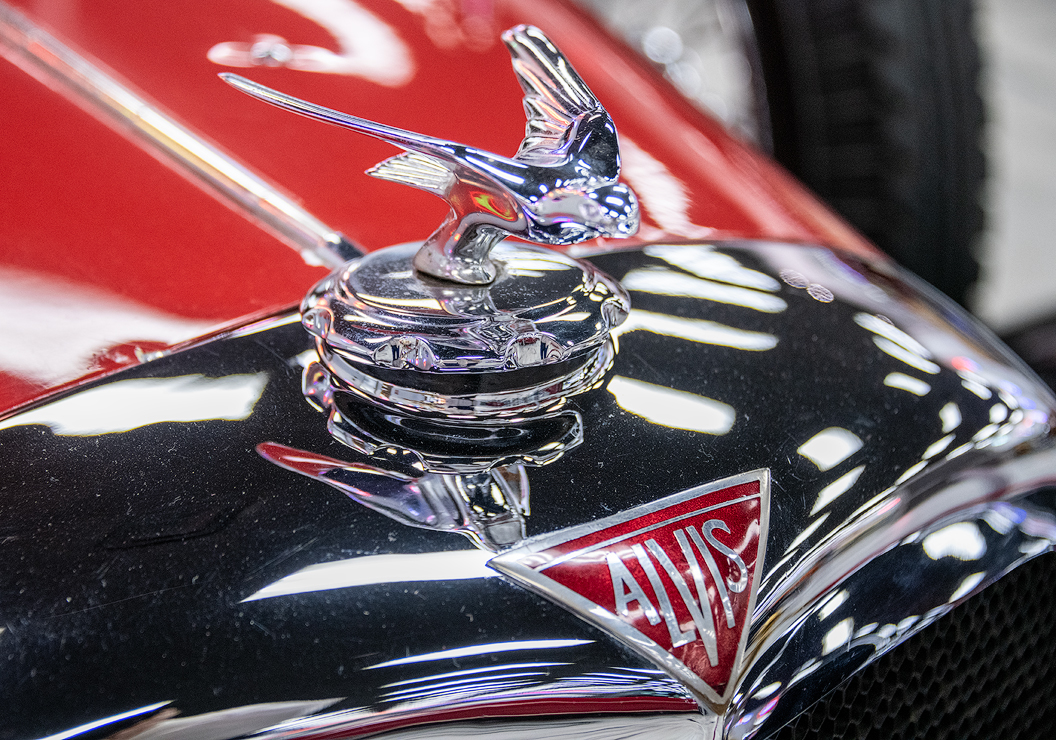
This is a frame-off, fully restored, and incredibly rare car. An aftermarket electric radiator fan was installed for the desert heat of Arizona. It is the only known right-hand drive Firebird Drophead Coupe in the U.S.
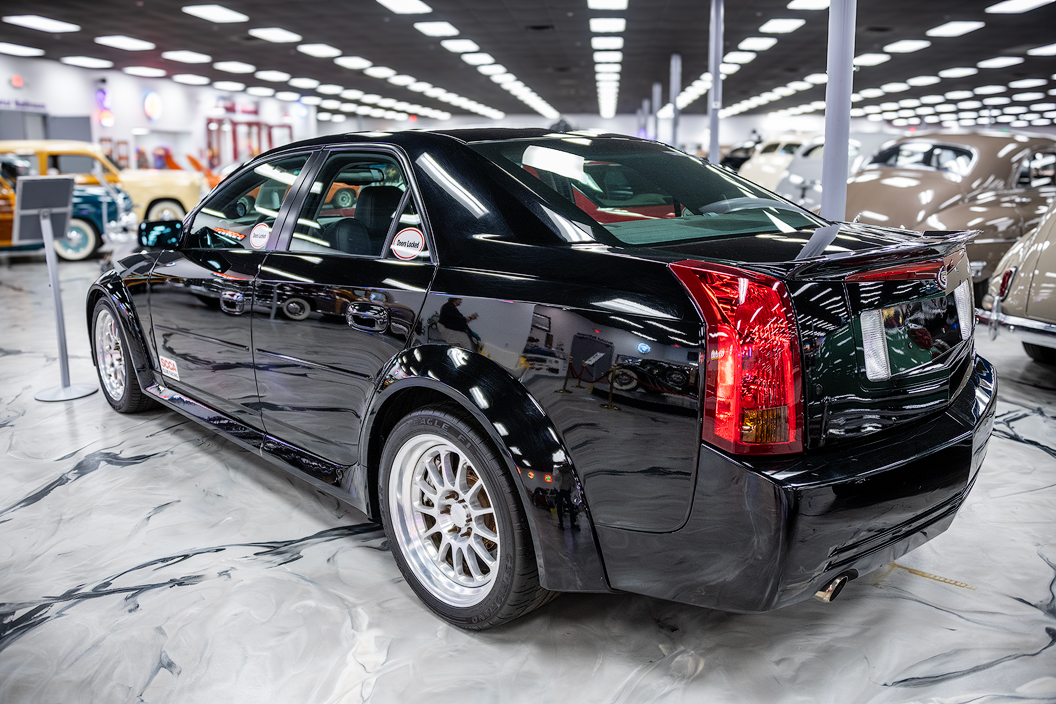
2004 Cadillac CTS-V
The CTS-V is the first race car developed by GM Racing in conjunction with the new GM Performance Division, an in-house center established in 2002 to explore potential enthusiast-oriented versions of production models. The CTS-V, introduced in late 2003 as a 2004 model, signaled Cadillac's entry into the low-volume, high-performance luxury car niche, and was the first vehicle to wear the division's high-performance V-series badge.

This car is the original factory prototype of the Cadillac CTS-V and was driven in SCCA (Sports Car Club of America) Race Series events by GM engineer and highly acclaimed race driver John Heinrici.
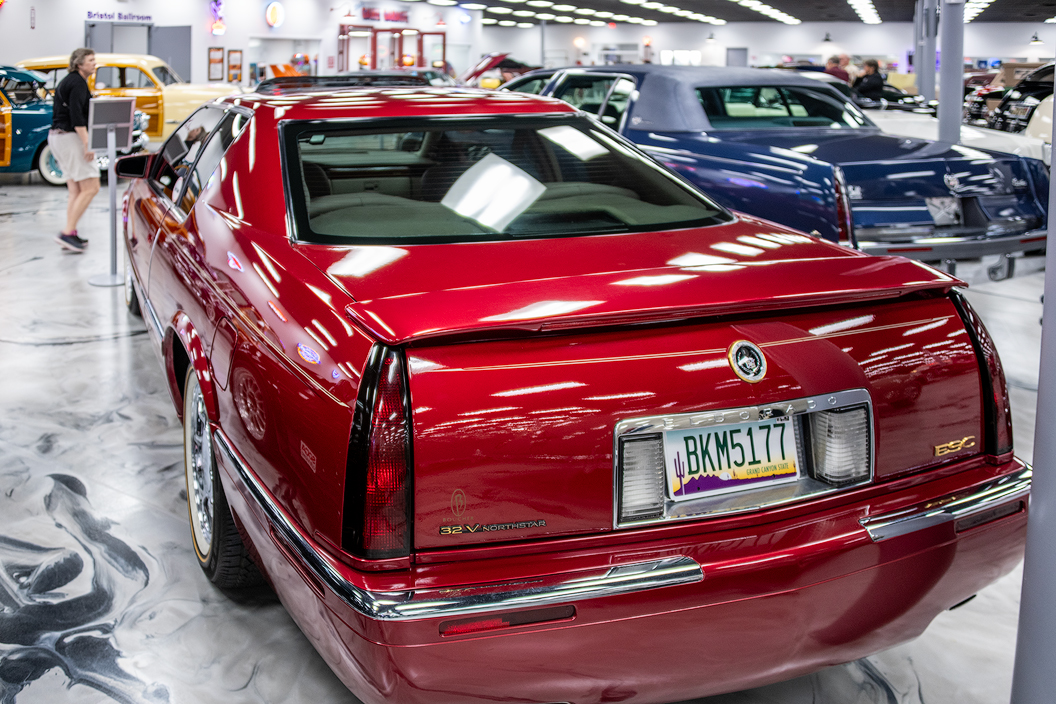
2001 Cadillac Eldorado ESC
The twelfth and final generation Eldorado introduced in 1992 was all new, drawing both interior and exterior styling cues from the 1988 Cadillac Solitaire show car.
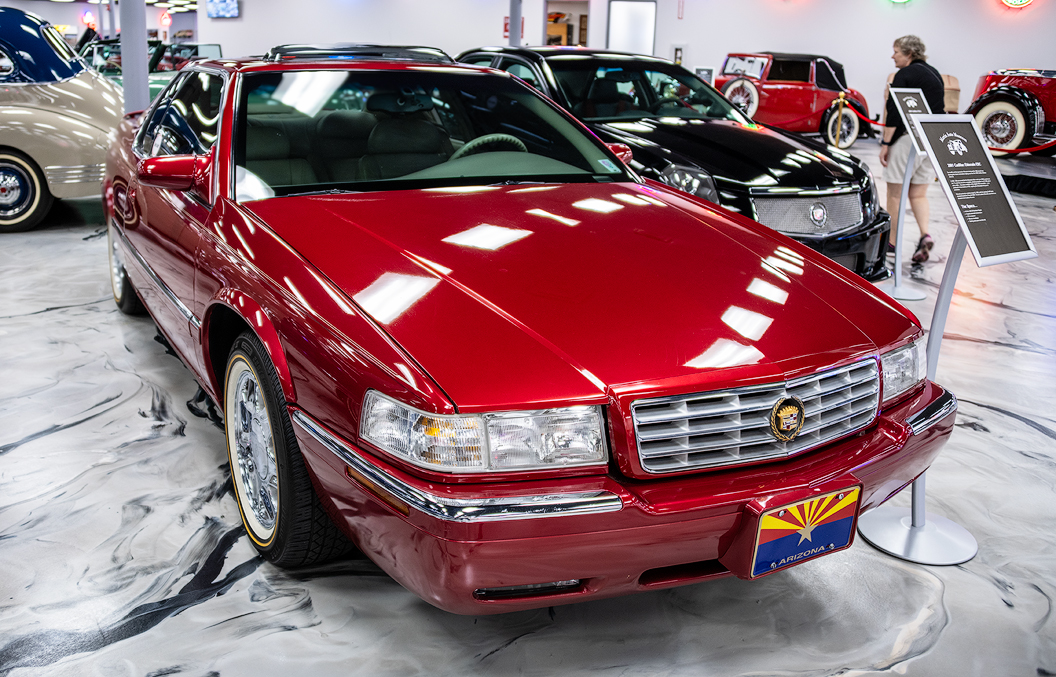
In 2001, GM announced that the Eldorado's 50th model year (2002) would be its last. To mark the end of the nameplate, a limited production run of 1,596 cars in red or white — the colors available on the original 1953 convertible — were produced in three batches of 532, signifying the Eldorado's first year of production.
Eldorado production ended on April 22, 2002, with the Lansing Craft Center retooled to build the Chevrolet SSR. The last Cadillac Eldorado assembled was donated to the Cadillac Museum.