Maryland, My Maryland, Part 5
An historical sign tells of how this sand barrier island began to be recognized and developed as a tourist destination.

 Another shot of the Ferris Wheel which I had to include so I could relate another story from my childhood. As I recall an earlier wooden Ferris Wheel stood just west of the boardwalk with it plane of rotation parallel to the boardward. Thus as you went up, you could see over the buildings and way into the distance to the north.
I sometimes rode the Ferris Wheel with one of my sisters. That was fine until we stopped at the top while the operators unloaded riders and welcomed new riders. My sister liked to rock the seat while the wheel was stationary. Since there were no seat belts and only a bar to keep us in the seat, it was pretty scary. Of course, telling your sister to stop rocking the seat meant that the rocking would increase. Amazing we survived those dangerous days.
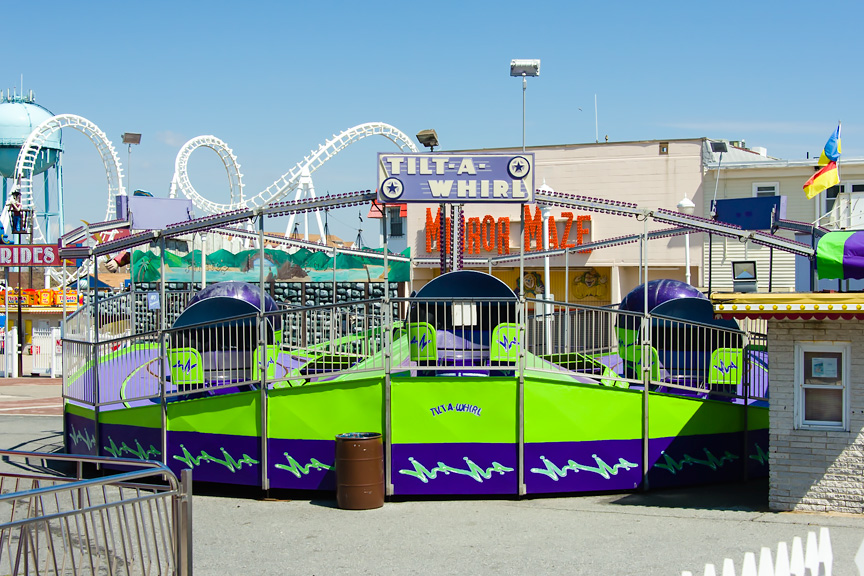 One ride that I very much enjoyed in those days was the Tilt-A-Whirl. I am sure most of you are familiar with it — relatively tame but the cars rotated around a pin as they rode up and down on a hilly track. Sometimes, depending on weight of the riders and their distribution on the seat, you could get the car rotating so rapidly, you were pinned in the seat with even your head pressed against the back of the car.
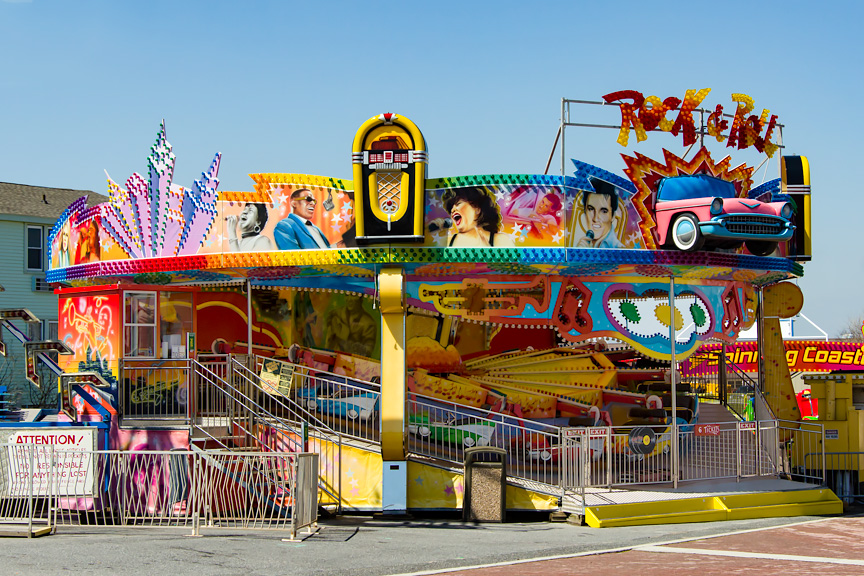 I also recall the Octopus which appears to have been replaced by other rides such as the Rock & Roll. It was not running this day but the riders go around in a big circle, up and down hills, while being blasted by rock music. I guess I'm too old to enjoy this one.
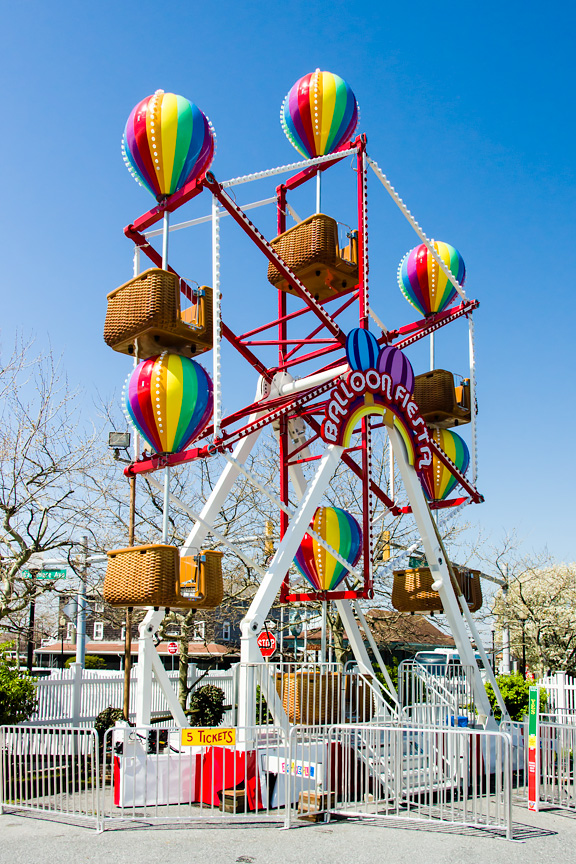 I thought this newer ride was cute — resembling small hot air balloons. Probably more of a kid's ride.
 This is definitely a kid's ride — a cute but goofy-looking caterpillar that runs on a track — a very tame roller coaster.
 The rides were fine but here is more of what I used to enjoy — Playland, one of the arcades. Of course, when I was young, the arcade games were mostly mechanical and they only cost a nickel or, in a few cases, a dime. Now most of the games are electronic (or electro-mechanical) and the cheapest ones demand at least a quarter.
 At least they still have the claw! The prizes are different. I remember small toys such as cheap cars and Chinese finger handcuffs (as we called them). But even if we did not win one of those cool prizes, we would win a marble or two — and these were cat's eye marbles — which we really enjoyed playing with during our time away from the beach.
 And this was one place where we could play pinball machines. In those days, establishments that had pinball machines were not ones that we kids were welcome in or allowed to visit. But the Ocean City arcades welcomed us and our few coins with open arms.
 Oh and remember Skee Ball? The original machines date back to the early 1900s. It was one of the first arcade games that gave you tickets based on your score. You could then trade them in on cheap toys — just like Dave and Busters.
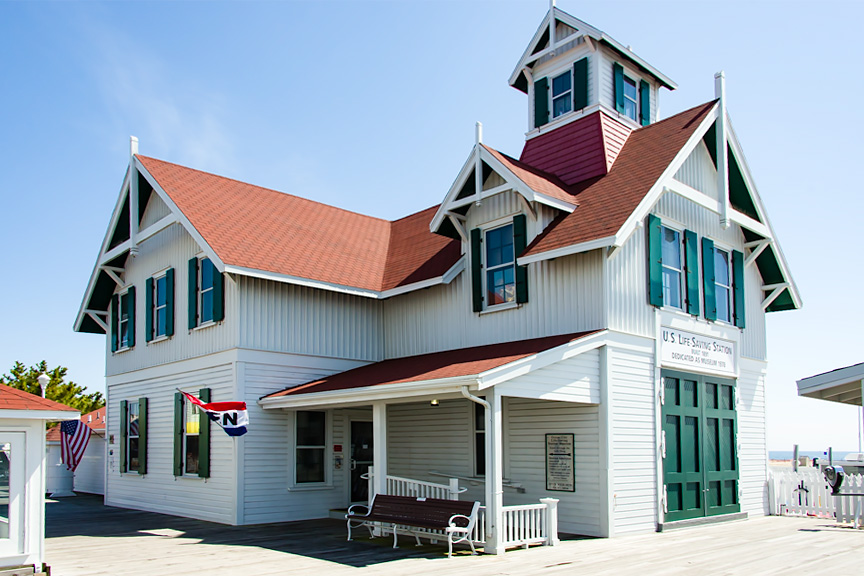 Near the south end of the boardwalk is the museum. The structure formerly housed the Life Saving Station, the forerunner to the Coast Guard. The building was used for that purpose until 1964 when a new building was constructed and the Coast Guard moved out.
The building continued to be used by the city but it fell into disrepair and was eventually scheduled for demolition. Fortunately, a group of concerned citizens formed the Ocean City Museum Society and with the generosity of the mayor and city council who made funds available to the society, the building was saved by moving it to its present location.
I have visited the museum previously with my mom (she had a friend who worked there) and it is filled with old photos and memorable artifacts related to the history of Ocean City.
One of the outstanding historical items is Laughing Sal. She is an early animatronic creation in the shape of a plump old lady who laughs incessantly. She originally stood outside a Fun House but I just recall her laughing in an alcove on one of the side streets. Her laugh was so infectious that pretty soon, nearly everyone would be laughing right along with Sal. Oh the memories.
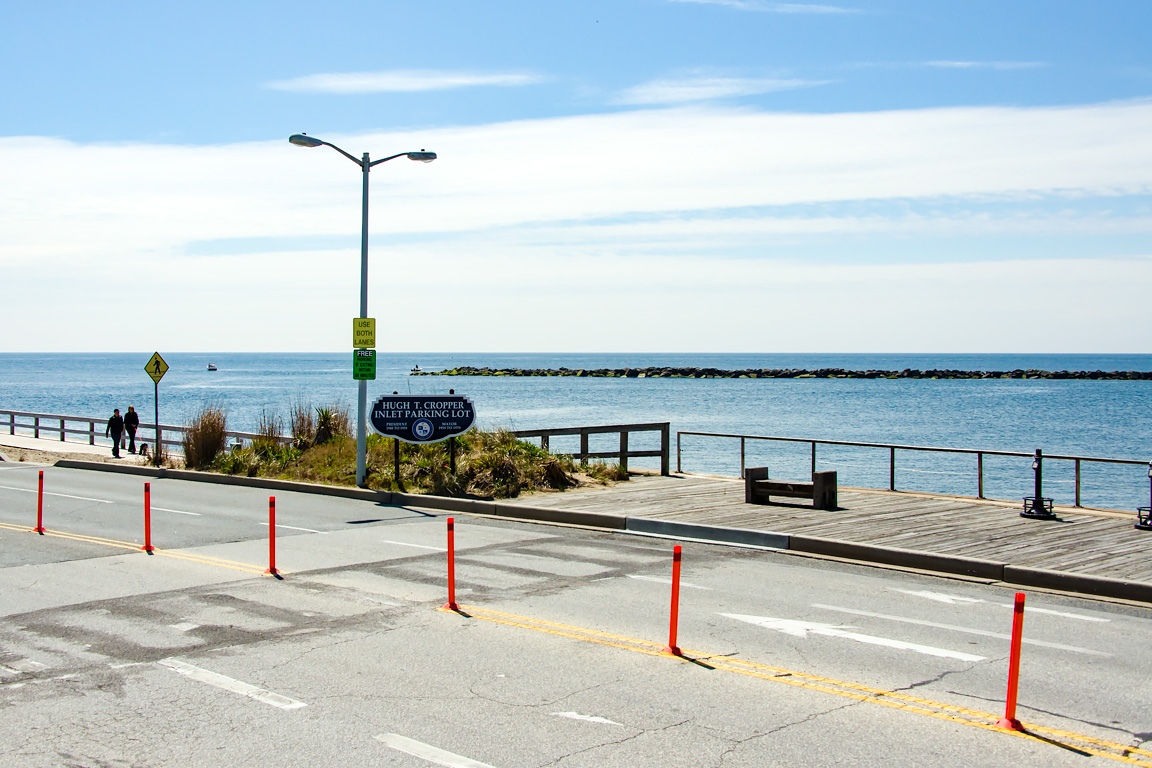
Here is the "inlet" at the south end of Ocean City. My mom used to tell about the big hurricane that hit in 1933 (she would have been 10 at the time) which cut this channel through the sand island (upon which Ocean City was built) — with the result that the Atlantic Ocean was then connected to the Sinepuxant Bay (which separates the barrier island from the mainland). The storm also destroyed the train tracks and bridge that crossed the bay. The new inlet separated Ocean City from Assateague Island National Seashore to the south. The Army Corps of Engineers took advantage of nature’s intervention and made the inlet permanent. The inlet eventually helped to establish Ocean City as an important Mid-Atlantic fishing port as it offered easy access to the fishing grounds of the Atlantic Ocean.