The Big Island: South Kohala, Part 4
Slightly further south is the Kaloko-Honokohau National Historical Park. I love the statement on their website — "To survive in a hot and arid environment the native Hawaiians (kanaka maoli) used ancient fishing skills, including the building of fishponds, and the knowledge of the location of precious fresh water (wai) that flows into the many brackish pools throughout the park. The spirit of the people (poe) and the knowledge of the elders (kupuna) created a tradition of respect and reverence for this area".
Walking down the trail toward the ocean, I encountered this lava pit filled with water. I wonder if this is one of the brackish pools mentioned above. Although the pit is ancient, the rock wall surrounding it appears to be modern. The red sign on the gate reads "Kapu. Do Not Enter Here."

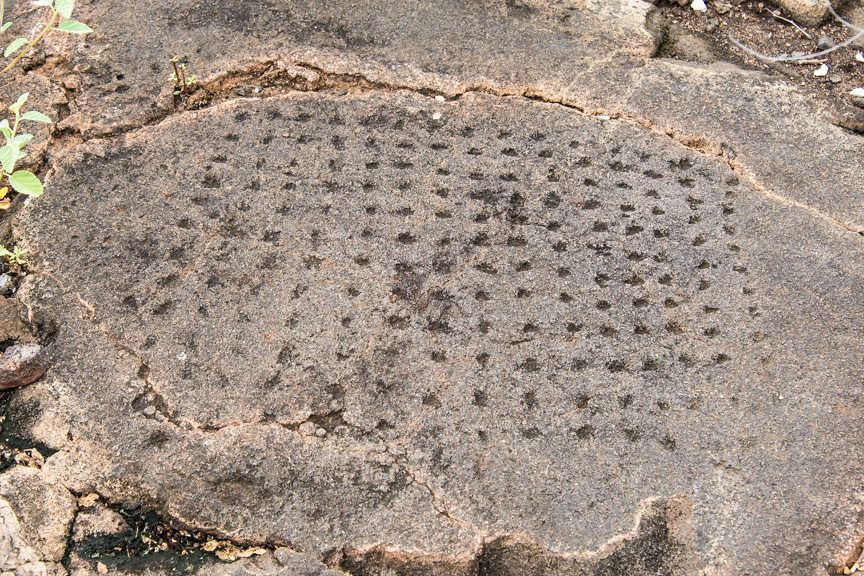 This park contains a number of petroglyphs along the trail. When I first saw this one, I tried to guess its significance. My guess was the stars in the sky.
But the actual purpose is as a board for a game similar to checkers called konane and for divination. Kupuna (elders) also say that papamu (the checkerboard of small holes) may have also been used as a calendar, as an abacus, for strategic war planning, medical instruction, diagnosis of disease, charting, teaching navigation and the constellations. Hey, I was right after all — star chart.
 These petroglyphs seemed to be more worn down than those I shared last week. In fact, I used a bit of extra Photoshop magic to enhance this one — an image quite similar to the previous ones.
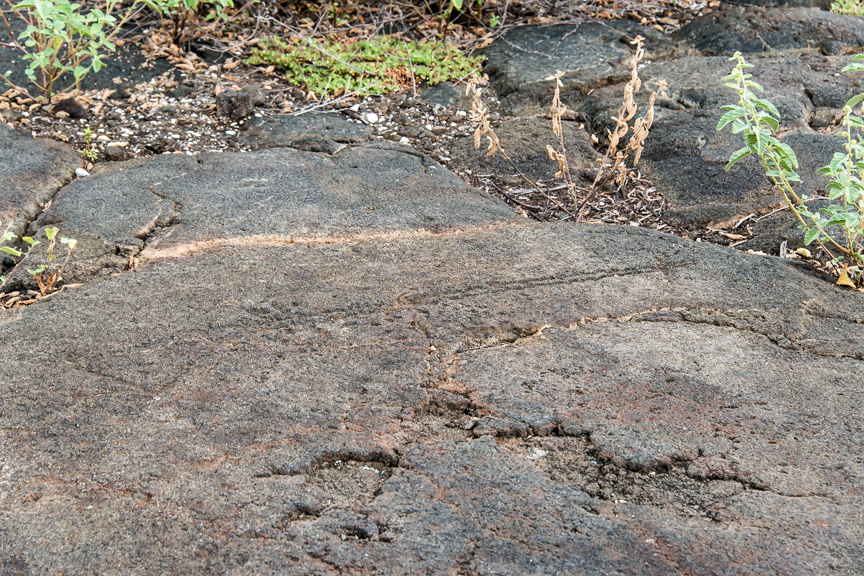 This one is quite different in that it depicts a musket (a bit hard to see but the stock is on the left and the barrel is on the right — in the center of the photo). It is speculated that the significance was as a symbol of western power — muskets having been introduced to Hawai`i by Europeans in the 1700s.
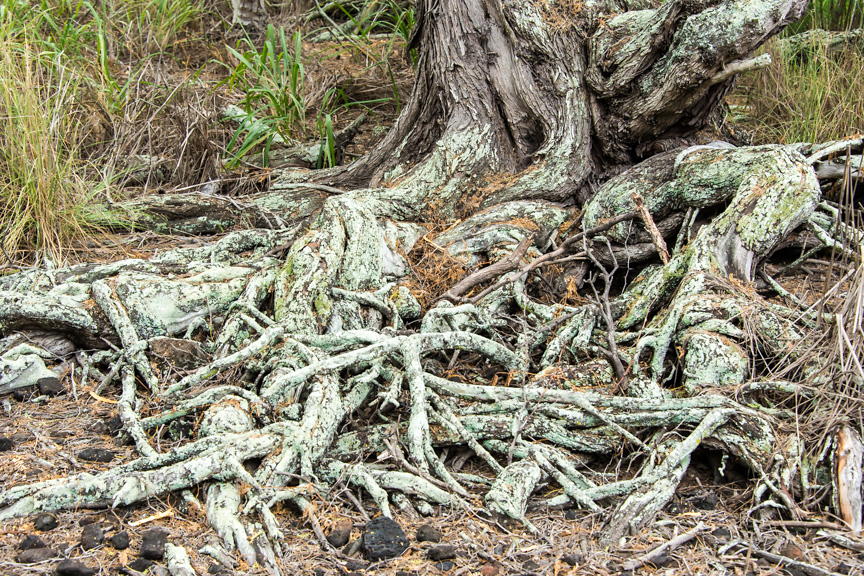 Along the trail were these fantastic exposed tree roots
covered in green lichen. Always catches my eye.
Along the trail were these fantastic exposed tree roots
covered in green lichen. Always catches my eye.
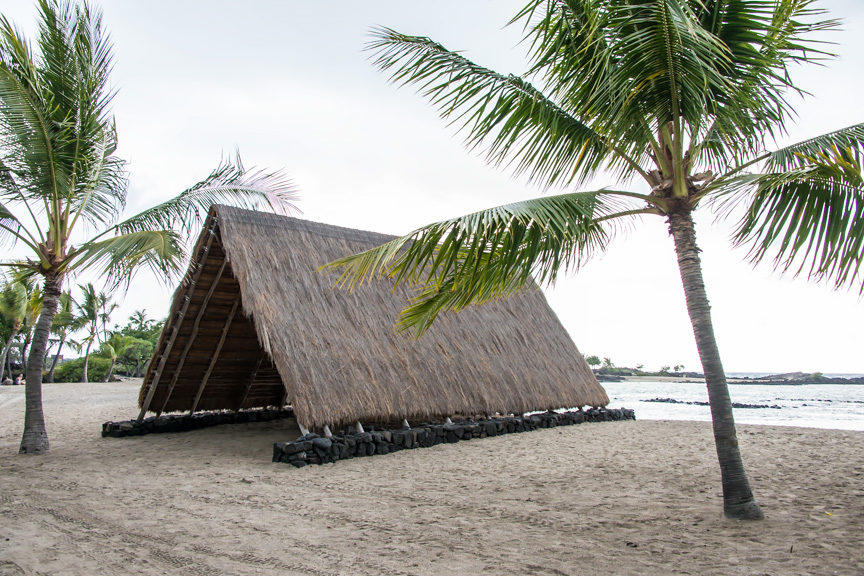 The trail leads all the way to the ocean with a nice white sand beach upon which rests a grass hut. I have seen these before and in modern times they are used to shelter outrigger canoes — none of which where present on this day.
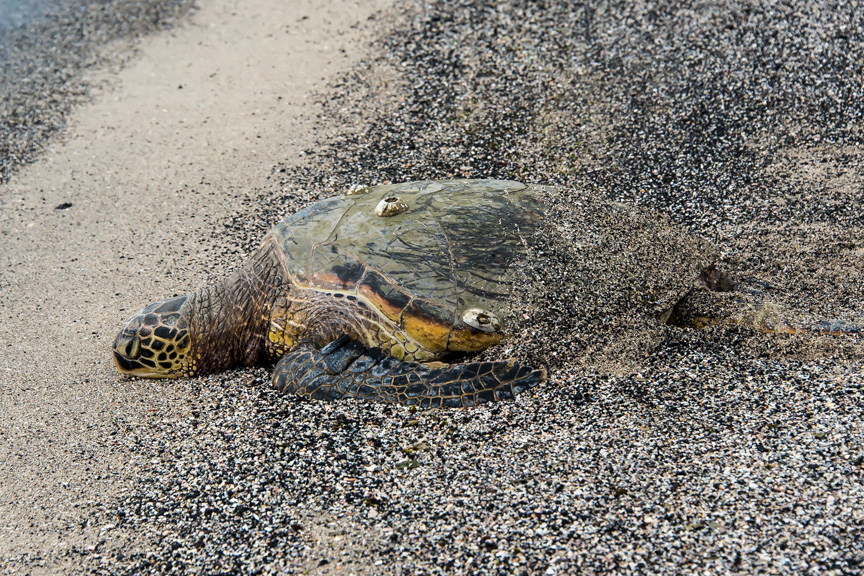 Then I spotted a green sea turtle resting on the sand after a busy day eating seaweed. And did you notice the huge barnacles on the shell? Turtles in the wild may live to be 80 years old — and this one looks to be quite old.
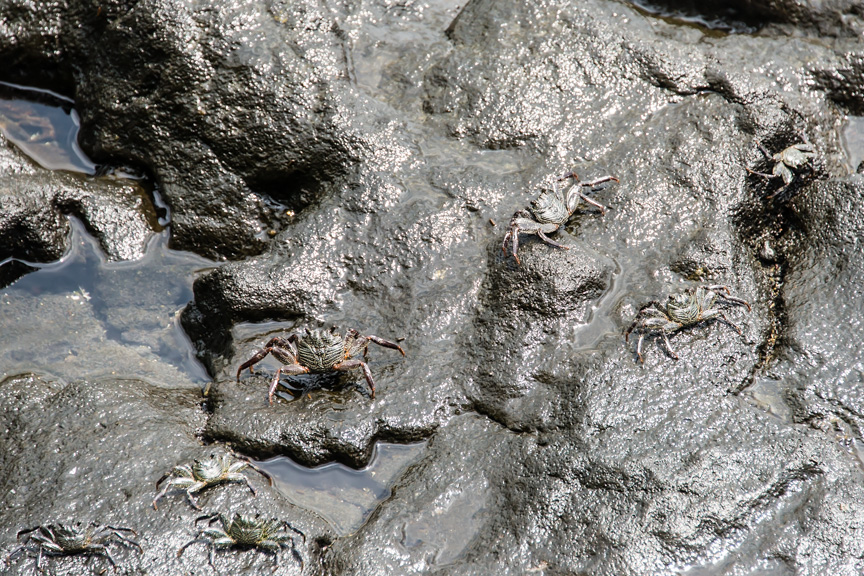 Also sharing the shoreline were a bunch of black crabs. I count seven — how many do you see?
I found an interesting story online — "[locals] take to the Hawaii lava shoreline with long sticks, a basket, and other tools to catch black rock crabs, locally known as a’ama. For a family day on the beach, hunting crabs is fun and educational at the same time, while providing a sort of “beach candy” as a reward. Rock crabs thickly cover the lava rock coast in Hawaii and are adept at jumping and hiding. The crabs are usually only a couple inches in diameter, which means these two will need to catch several to make a meal. Most often the crabs are seen as more of a treat or pupu (appetizer) than a full meal. Although some people cook the crabs before eating them, they are typically eaten raw by opening the shell back and scooping out the inside."
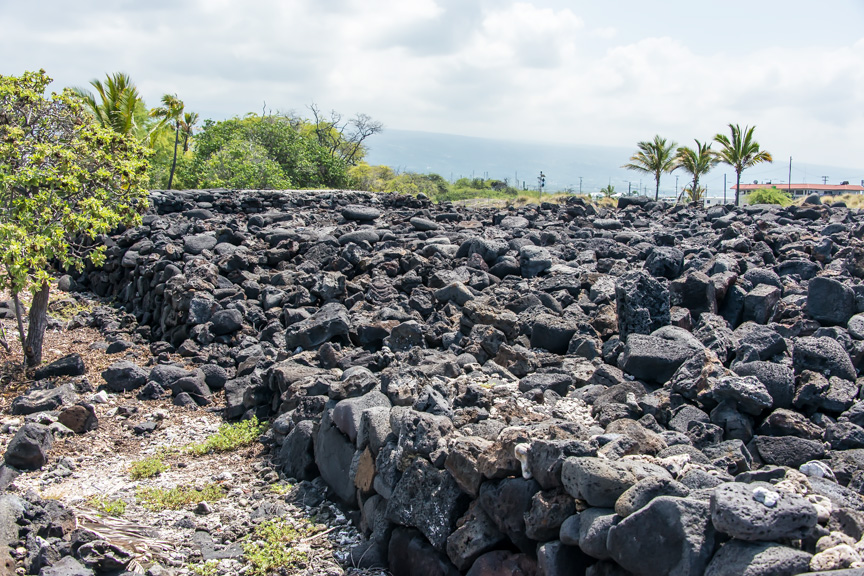 To the left side of the beach was a huge pile of rocks with a sign saying "Keep off the rocks". There was no indication as to the significance but I guessed it might be the remains of a heiau (ancient Hawai`ian temple). I encountered one local and I asked him and he confirmed it was a heiau — but did not know what happened to the heiau sign that used to be there.
All day, I was chased by the heavy clouds — but it was here that the rain started. Light at first, then heavier and I still had to walk back to my car. I did not want my new camera to get wet, so I used my baseball cap to cover the camera — leaving my head exposed. But I figured my head could be dried off without damage — not so my camera.
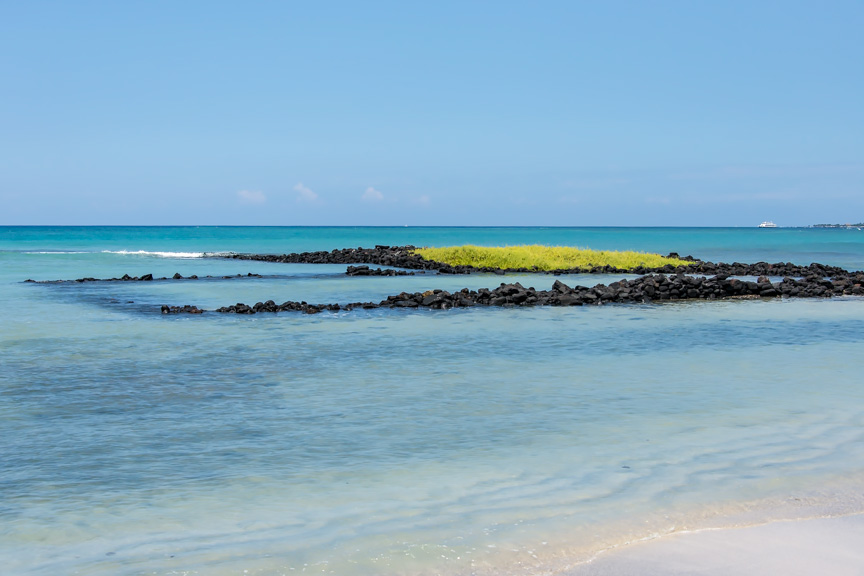 But I had to return the next day after the weather cleared because one of the highlights of this park is the fish trap. Fish trap? Never heard of it. I know all about fish ponds where fish were kept until needed. But fish traps?
Well, this is it. The way it works is by taking advantage of the tides. When the tide is high, water covers the lava rocks on the left and fish can swim in, seeking food and shelter in the perimeter rocks. When the tide goes out, the water level recedes and the fish are trapped — and the ancient Hawai`ians could just climb in and grab them. Dinnertime!
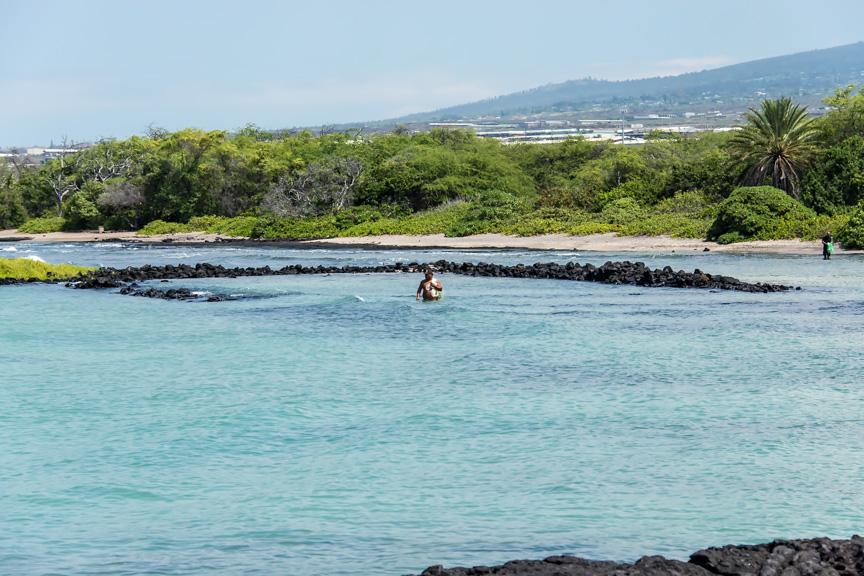 From the other side, I saw that a local fellow with his net, fishing just outside the fish trap. Take away the modern buildings beyond the beach vegetation and you have an ancient scene of subsistence in Hawai`i.
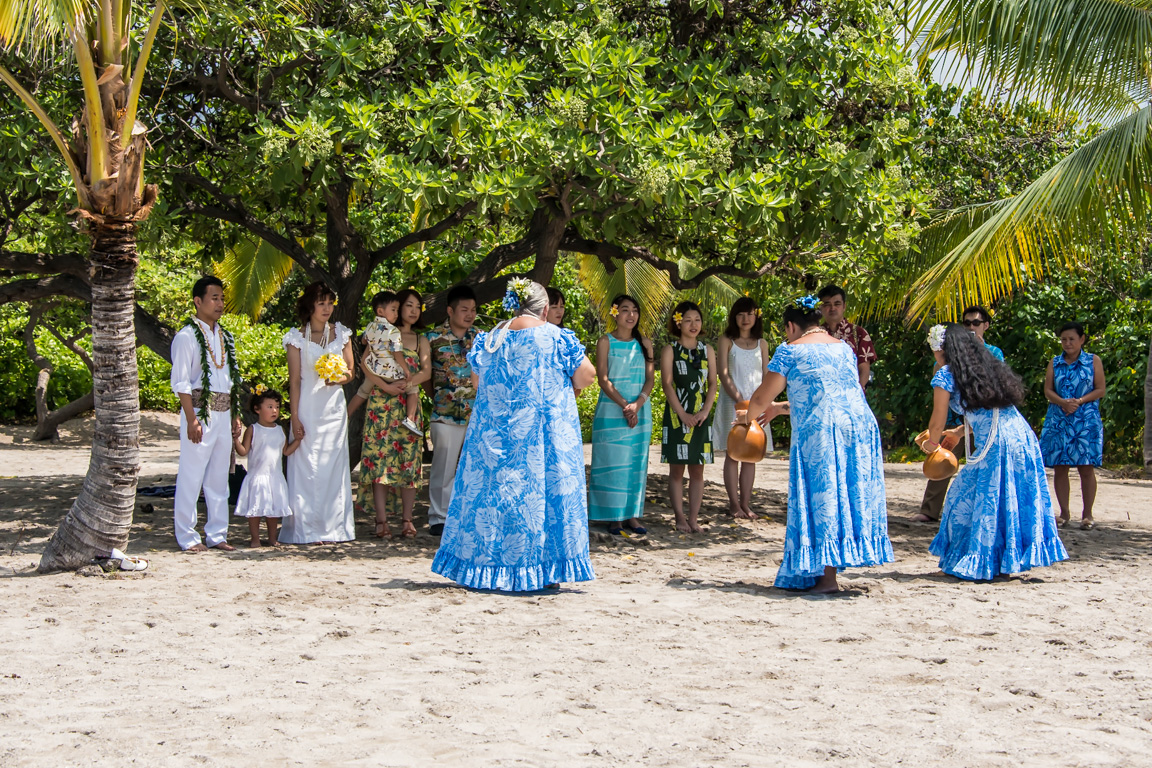
On the beach, music caught my attention — a wedding was being performed complete with hula accompanied by ukulele and ipu (gourd). Lucky they chose today instead of yesterday — it would have been a very wet bride and groom. On second thought, maybe that is what the grass hut is for — rainy day weddings.